A Common Question from Our Travelers
Just last week, one of our lovely clients from the UK reached out with a question we hear quite often: “Could I please ask for some advice on currency? We are travelling from the UK to Sri Lanka, should I bring British Pounds to change into Rupees? Or am I better also bringing USD?”
It’s such a practical question, isn’t it? And honestly, it’s one that deserves a thorough answer because getting your currency strategy wrong can cost you money, create unnecessary stress, and potentially leave you in awkward situations during your holiday.
After years of helping international travelers navigate Sri Lanka through BlueSky Galle Taxis, we’ve learned exactly what works best for currency exchange, where to get the best rates, how much cash to carry, and which payment methods make sense in different situations. Whether you’re coming from London, Sydney, Tokyo, Dubai, or New York, this comprehensive guide will ensure you handle your money smartly throughout your Sri Lankan adventure.
Let me share everything you need to know about currency in Sri Lanka—not from a textbook, but from real experience helping thousands of international visitors just like you.
Understanding Sri Lankan Currency (LKR)
What is the Sri Lankan Rupee?
The Sri Lankan Rupee (LKR or Rs.) is the official currency of Sri Lanka. You’ll see it abbreviated as “Rs” in shops and restaurants, though increasingly you’ll also see “LKR” particularly in tourist areas.
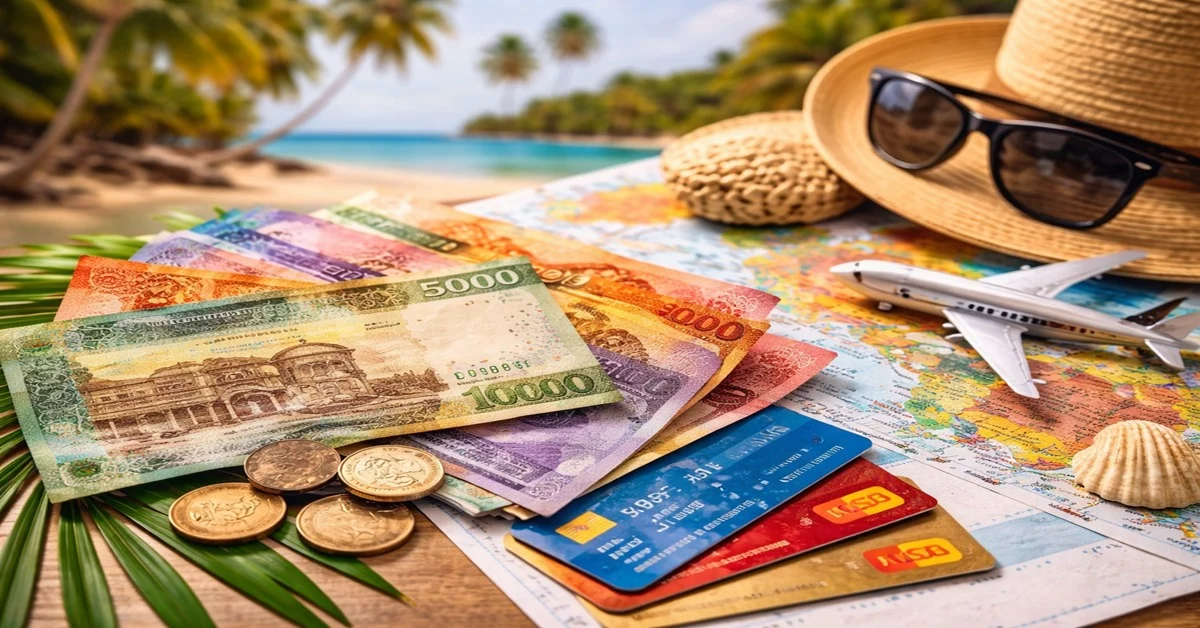
The currency comes in both coins and banknotes:
Coins: 1, 2, 5, 10 rupees (though 1 and 2 rupee coins are increasingly rare and almost worthless)
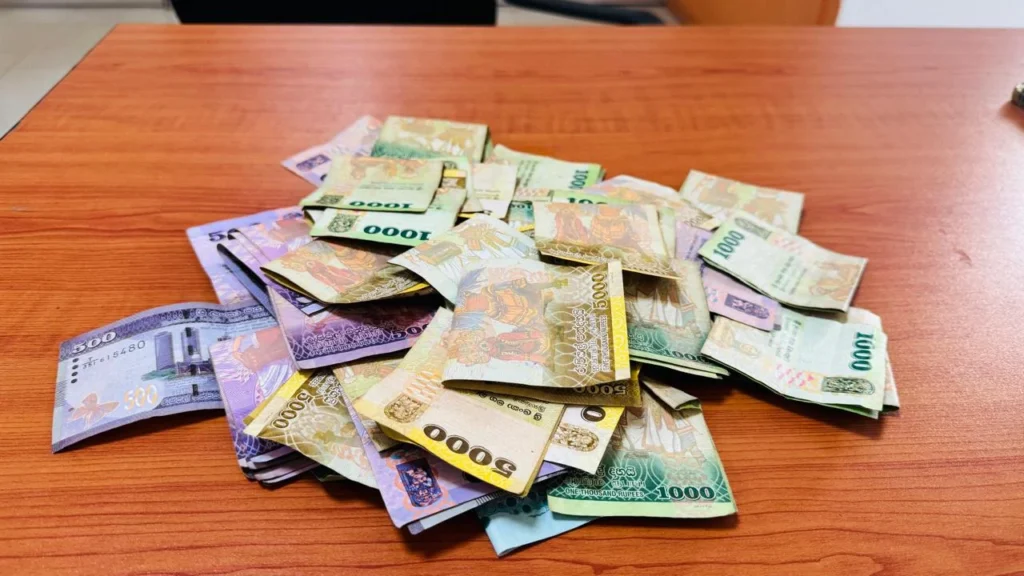
Banknotes: 20, 50, 100, 200, 500, 1,000, 2000, 5,000 rupees
The most commonly used notes are 100, 500, 1,000, and 5,000 rupee denominations. You’ll find that smaller notes (20, 50, 100) are incredibly useful for tuk-tuks, street vendors, and small purchases, while larger notes work for hotels, restaurants, and shopping.
Sri Lankan banknotes feature beautiful imagery—colorful birds, butterflies, dancers, and cultural symbols—making them quite attractive compared to many currencies. The newer polymer notes (particularly the 5,000 rupee note) are more durable and harder to counterfeit than the older paper versions.
Current Exchange Rate Landscape
Exchange rates fluctuate, but to give you a general idea of what to expect (rates as of early 2026):
- 1 GBP = approximately 410-430 LKR
- 1 USD = approximately 310-330 LKR
- 1 EUR = approximately 340-360 LKR
- 1 AUD = approximately 200-215 LKR
These rates vary daily and differ between exchange providers. The spread between buying and selling rates can be 2-5%, so checking multiple sources makes sense for large exchanges.
A simple way to think about costs: a decent local meal might cost 500-1,000 rupees (£1.20-£2.40), a nice restaurant dinner 2,000-4,000 rupees (£5-£10), and a mid-range hotel room 10,000-25,000 rupees (£25-£60) per night.
How Currency Works in Sri Lanka
Sri Lanka remains predominantly a cash economy, particularly outside major cities and tourist hotspots. While this is gradually changing, you’ll still find that:
- Small businesses, street vendors, and local restaurants operate cash-only
- Tuk-tuk drivers almost never accept cards
- Many guesthouses and small hotels prefer cash
- National park entrance fees are often cash-only
- Tips and small purchases require physical rupees
That said, the payment landscape is modernizing:
- Major hotels, upscale restaurants, and chain stores accept credit cards
- ATMs are widely available in cities and tourist areas
- Some businesses now accept digital payments via local apps
- International payment cards work at many establishments
The key is maintaining the right balance between cash and cards, which we’ll explore throughout this guide.
Should You Bring GBP, USD, or EUR to Sri Lanka?
The Truth About Currency Exchange in Sri Lanka
Here’s the straightforward answer to our UK client’s question: You can bring British Pounds and exchange them directly to Sri Lankan Rupees without any problem. You don’t need to convert to USD first.
However—and this is important—exchange rates and availability vary by currency. Let me break down what actually happens on the ground:
USD (US Dollars) traditionally get the best exchange rates at most currency exchanges in Sri Lanka. The USD remains the preferred foreign currency for businesses, and you’ll often find slightly better rates when exchanging dollars compared to other currencies.
GBP (British Pounds) are widely accepted at exchange counters, banks, and airports. The rates are competitive—usually just marginally less favorable than USD but perfectly fine for travelers. Given that UK visitors represent a major tourist market, all legitimate exchange services handle pounds without issues.
EUR (Euros) are also widely accepted with competitive rates, reflecting the large number of European tourists visiting Sri Lanka.
Which Currency Gets the Best Rates?
Based on real-world observations helping our clients:
First tier (best rates): USD typically edges ahead by 1-2% compared to other currencies
Second tier (excellent rates): GBP and EUR usually receive very similar rates to each other, just fractionally below USD
Third tier (acceptable rates): Other major currencies (AUD, CAD, JPY, SGD) are accepted at licensed money changers, though rates may be 2-3% less favorable
Fourth tier (less ideal): Currencies from smaller economies may be difficult to exchange or receive unfavorable rates
What We Recommend for UK Travelers
For our UK clients, here’s our honest recommendation:
Option 1 (What we recommend most): Bring a moderate amount of GBP cash (£200-400) for initial exchange upon arrival, plus rely primarily on ATM withdrawals throughout your trip using your UK debit card. This combination provides the best rates overall while maintaining flexibility.
Option 2 (Also perfectly good): Bring GBP exclusively and exchange at reputable money changers or banks as needed. The rates are competitive enough that converting to USD first wastes time and money.
Option 3 (Premium convenience): Bring a mix of GBP cash and USD. Exchange whichever currency offers better rates at any given time. This maximizes your exchange advantage but requires carrying multiple currencies.
What we don’t recommend: Converting GBP to USD before leaving the UK. You’ll pay exchange fees twice (GBP→USD, then USD→LKR), negating any marginal advantage USD might offer in Sri Lanka.
The reality? The difference between exchanging USD versus GBP in Sri Lanka is so minimal (maybe 1-2%) that the convenience of bringing your home currency outweighs any theoretical savings. Most UK travelers simply bring pounds and exchange them without any issues or significant rate disadvantage.
Best Places to Exchange Currency in Sri Lanka
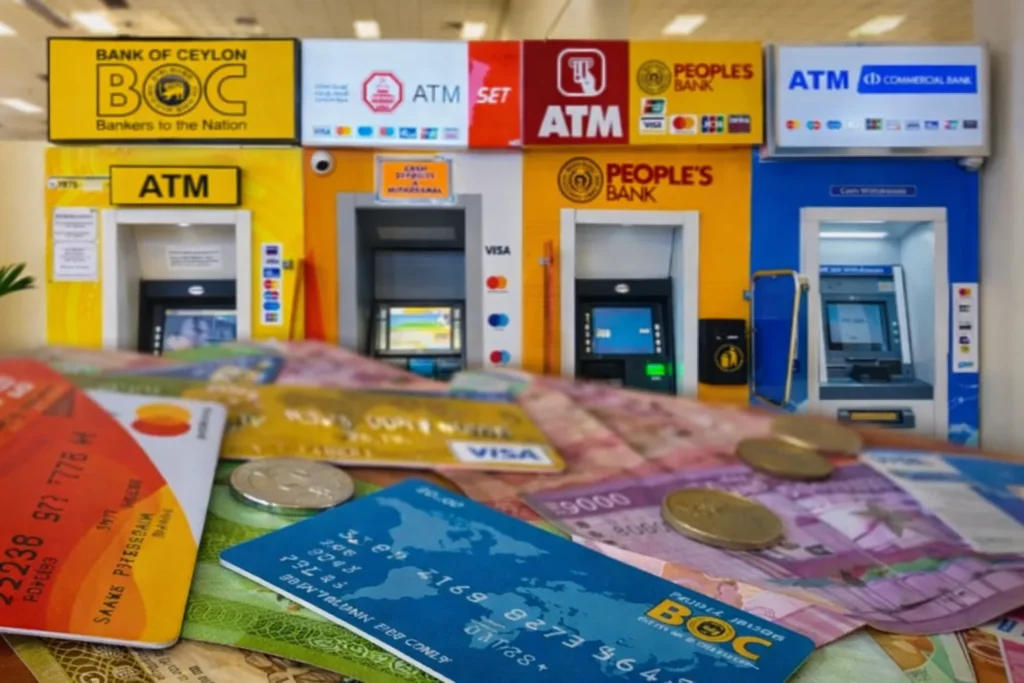
Airport Exchange Counters
Bandaranaike International Airport (Colombo) has several currency exchange counters both before and after immigration in the arrivals hall.
Advantages:
- Immediate access upon arrival
- Open 24/7 for all international flights
- Convenient when you need cash right away
- Legitimate, licensed operations
Disadvantages:
- Rates are typically 2-4% worse than city exchanges
- Not ideal for exchanging large amounts
- Can have queues during peak arrival times
Our recommendation: Exchange a modest amount at the airport (£50-100 worth) to cover your immediate needs—airport transfer with BlueSky Galle Taxis (if paying cash), snacks, water, any unexpected expenses. This gives you breathing room to find better rates once settled.
Many of our clients pre-book their airport transfer with us and pay by card or bank transfer, eliminating the immediate cash pressure and allowing them to skip airport exchange entirely!
Banks vs. Licensed Money Changers
Banks: Commercial Bank, Sampath Bank, HNB (Hatton National Bank), and other major Sri Lankan banks all offer currency exchange services.
Advantages:
- Secure and trustworthy
- Competitive rates (usually better than airports)
- Official receipts provided
- Multiple branches in cities and tourist areas
Disadvantages:
- Limited hours (typically 9 AM – 3 PM weekdays, closed weekends)
- Can involve paperwork and waiting
- Some branches don’t offer foreign exchange
- Queues can be long
Licensed Money Changers: Private exchange bureaus licensed by the Central Bank of Sri Lanka.
Advantages:
- Often the best rates available (matching or beating banks)
- Faster service with less bureaucracy
- Extended hours including weekends
- Found in tourist areas and shopping districts
Disadvantages:
- Need to verify legitimacy (check for Central Bank license displayed)
- Occasional scam operations exist (easily avoided with basic precautions)
- Less formal receipts compared to banks
Our recommendation: Licensed money changers in tourist areas like Galle Fort, Colombo Fort area, and major beach towns typically offer the best combination of rates and convenience. We can recommend specific trustworthy establishments to our BlueSky Galle Taxis clients.
Top locations for exchange:
- Galle Fort area (multiple licensed changers)
- Colombo Fort and Pettah district
- Kandy city center
- Negombo (near airport)
- Major beach towns (Hikkaduwa, Mirissa, Unawatuna)
Hotels (And Why You Should Avoid Them)
Nearly all hotels offer currency exchange as a guest service. Here’s why we suggest avoiding this option except in emergencies:
The problem: Hotel exchange rates are typically 5-10% worse than market rates. They build in a hefty convenience premium that costs you significantly.
Example: If the market rate is 420 LKR per GBP, a hotel might offer 380-390 LKR—a substantial difference that adds up quickly.
When it makes sense: Late at night when everything else is closed and you desperately need cash, or you’re in a very remote area with no alternatives. Otherwise, wait for better options.
Credit and Debit Cards in Sri Lanka
Where Cards Are Accepted
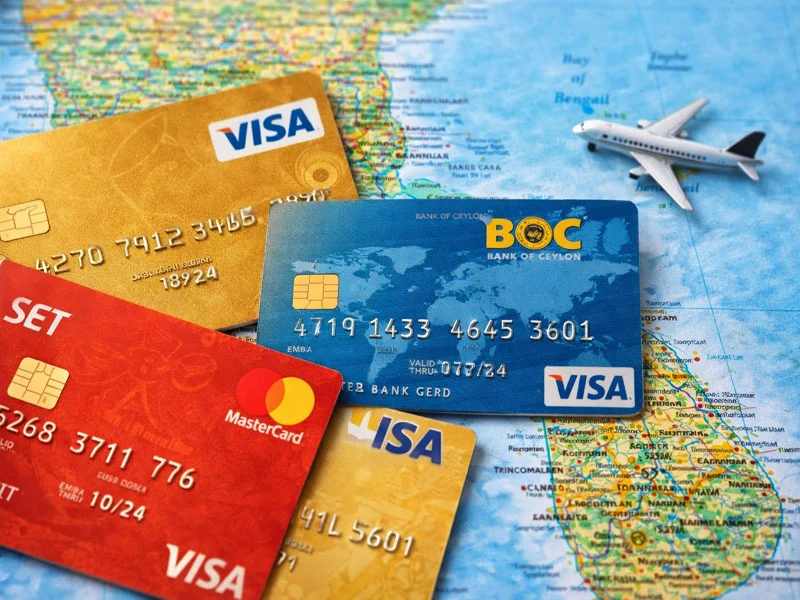
Credit and debit card acceptance in Sri Lanka varies significantly by establishment type and location:
Widely accepted (95-100%):
- Luxury hotels and resorts
- International hotel chains
- Upscale restaurants in tourist areas
- Large shopping malls and chain stores
- Tour operators and travel agencies
- Major attractions (some)
Sometimes accepted (40-70%):
- Mid-range hotels
- Popular tourist restaurants
- Boutique shops in tourist zones
- Some taxis and private drivers (including BlueSky Galle Taxis—we accept card payments!)
- Certain national park offices
Rarely or never accepted (0-20%):
- Small guesthouses and family-run hotels
- Local restaurants and street food vendors
- Tuk-tuk drivers
- Market vendors and small shops
- Small attraction sites
- Most taxis
- Rural areas generally
Card types: Visa and Mastercard enjoy the widest acceptance. American Express is accepted at major hotels but less commonly elsewhere. Discover and other cards have very limited acceptance.
Card Fees and Foreign Transaction Charges
Using your regular UK credit or debit card abroad typically incurs:
Credit cards:
- Foreign transaction fee: 2.5-3% per purchase
- Cash advance fee if used at ATMs: Often 3-5% plus interest from withdrawal date
- Exchange rate margin: Some issuers add 1-2% to the exchange rate
Debit cards:
- Foreign transaction fee: 2-3% typically
- ATM withdrawal fee: £1-3 per transaction
- Exchange rate margin: Variable by bank
Example: A £1,000 hotel bill on a standard UK credit card might actually cost:
- Charge: £1,000
- Foreign transaction fee (2.75%): £27.50
- Exchange rate margin (1%): £10
- True cost: £1,037.50
Best Cards for International Travel
Important Note: Card features, fees, and terms can change without notice. Always verify current conditions directly with your card provider before traveling, as the information below reflects general features that may have been updated since publication.
Top recommendations for UK travelers:
Wise Card: Generally offers true mid-market exchange rates with no foreign transaction fees. Historically provided low ATM withdrawal fees (free up to certain monthly limits, small percentage thereafter). Supports multiple currencies in one account. Check current terms at wise.com before applying.
Revolut: Typically similar to Wise with excellent exchange rates and no foreign fees on weekdays (may have small weekend markup depending on account type). Usually offers free ATM withdrawals up to specified limits. Premium versions often include enhanced features. Verify current fee structure at revolut.com as terms vary by account tier.
Monzo: UK bank account that traditionally offers fee-free foreign spending and free ATM withdrawals up to monthly limits (historically £200). Includes full banking features plus travel benefits. Confirm current ATM withdrawal limits and foreign transaction policies at monzo.com.
Chase Debit Card: Has offered fee-free foreign spending with cashback on purchases (including abroad) and no foreign transaction fees. Check chase.co.uk for current cashback rates and terms as promotional offers may change.
Starling Bank: Typically provides fee-free spending abroad, no transaction fees, and free ATM withdrawals worldwide. Verify current fee policy at starlingbank.com before relying on these features.
For other nationalities: Similar fee-free travel cards exist in various markets—N26 (Europe), Charles Schwab High Yield Investor Checking (USA), 28 Degrees Mastercard (Australia), among others. Research current offerings in your home country as product features regularly evolve.
These types of cards can potentially save hundreds of pounds/dollars/euros on a typical Sri Lankan holiday compared to traditional bank cards, while often providing better exchange rates than cash exchange. We strongly recommend researching current options and applying for an appropriate travel card before your trip.
Before you travel, always:
- Verify current fees and ATM withdrawal limits with your card provider
- Check if any fair usage policies or caps apply
- Understand how exchange rates are calculated
- Confirm the card works in Sri Lanka (most do, but always verify)
- Read recent user reviews to ensure service quality remains high
- Notify your card provider of your travel dates to prevent fraud blocks
How Much Cash Should You Carry?
Daily Budget Estimates
How much cash you need depends on your travel style and where you’re staying:
Budget travelers (hostels, guesthouses, local transport, street food):
- Daily expenses: 3,000-6,000 LKR (£7-15)
- Cash needed: Since budget establishments rarely accept cards, carry more cash
- Withdrawal frequency: Every 3-4 days
Mid-range travelers (decent hotels, mix of local and tourist restaurants, private drivers like BlueSky Galle Taxis, some attractions):
- Daily expenses: 8,000-20,000 LKR (£20-50)
- Cash needed: Moderate—many expenses can be card payments
- Withdrawal frequency: Every 5-7 days
Luxury travelers (high-end hotels, upscale dining, private tours, premium experiences):
- Daily expenses: 30,000+ LKR (£70+)
- Cash needed: Minimal—most services accept cards
- Withdrawal frequency: Every 7-10 days, mainly for tips and small purchases
Special considerations:
- National park safari: 15,000-25,000 LKR often cash-only
- Ayurvedic treatments: 5,000-15,000 LKR, sometimes cash-only
- Souvenir shopping: Budget 10,000-50,000 LKR depending on purchases
- Tipping: Budget 2,000-5,000 LKR daily for various services
Cash vs. Card Balance
The smartest approach combines both payment methods strategically:
Ideal strategy:
- Carry 20,000-40,000 LKR cash (£50-100) for daily expenses
- Use cards for major expenses (hotels, nice restaurants, shopping)
- Keep emergency cash reserve separate (10,000-20,000 LKR)
- Withdraw from ATMs every few days rather than carrying large amounts
Why this balance works:
- Cash handles small, everyday transactions smoothly
- Cards provide security for large purchases and reduce theft risk
- You’re never stuck without payment options
- Minimizes the cash you physically carry
- Maintains flexibility across different situations
Regional adjustments:
- In Colombo and major tourist areas: Lean more heavily on cards
- In rural areas and small towns: Carry more cash
- During festivals and holidays: Carry extra cash as banks and ATMs may be crowded or closed
- For day trips to national parks or remote areas: Ensure sufficient cash before departure
Denominations That Are Most Useful
Not all rupee notes are equally useful! Here’s what works best:
Most useful denominations:
- 100 and 500 rupee notes: Perfect for tuk-tuks, street food, small shops, tips, and everyday purchases. These are worth their weight in gold for daily transactions.
- 1,000 rupee notes: Good all-around denomination accepted everywhere for mid-range purchases.
Less useful but necessary:
- 5,000 rupee notes: Fine for hotel bills and larger purchases, but many small vendors can’t make change. Expect “no change” responses from tuk-tuk drivers!
- 20 and 50 rupee notes: Increasingly rare and becoming obsolete. Nice for tiny purchases but not essential.
Strategy when withdrawing or exchanging:
- Request smaller denominations when possible
- Break large notes at hotels, supermarkets, or restaurants early in the day
- Never get into a tuk-tuk with only 5,000 rupee notes—drivers often genuinely don’t have change
- Keep a stash of 100 and 500 notes separate for tipping and small purchases
The “change problem”: One constant frustration in Sri Lanka is vendors claiming “no change” even for reasonable purchases. Combat this by:
- Making purchases at larger establishments early in the day to break big notes
- Keeping small denominations separate and accessible
- Buying something small at your hotel shop to get change
- Having your driver (like your BlueSky Galle Taxis chauffeur) help you exchange large notes at appropriate establishments
How to Verify Exchange Rates
Before exchanging:
- Check online rates: Websites like XE.com or Google show mid-market rates (wholesale rates banks use). Expect to receive 2-4% less than this rate.
- Compare multiple sources: Check rates at 2-3 different money changers. Significant variation suggests potential problems.
- Ask for the complete picture: “If I give you £200, how many rupees will I receive after all fees and commissions?” Get this number confirmed.
- Calculate yourself: Use your phone calculator to verify the math. If giving £200 at a rate of 420 LKR per pound, you should receive 84,000 rupees minus any stated commission.
During exchange:
- Watch the entire process: Don’t look away while your money is being counted or exchanged
- Count everything slowly: Take your time counting what you receive
- Verify notes: Check for obvious counterfeits (though this is rare in legitimate establishments)
- Don’t accept damaged notes: Torn, heavily soiled, or damaged notes may be difficult to use elsewhere
Getting Receipts and Counting Your Money
Always get a receipt showing:
- Amount of foreign currency given
- Exchange rate applied
- Amount of LKR received
- Any fees or commissions
- Date and location
- Business license number
Why receipts matter:
- Prove the transaction occurred
- Required if re-exchanging unused rupees when departing
- Provide recourse if you discover problems later
- Some countries require proof of legitimate currency exchange
Counting protocol:
- Count all money at the counter before leaving
- Separate denominations and count each stack
- Don’t be embarrassed to recount if unsure
- Don’t let anyone rush you
- If the amount is wrong, address it immediately
Red flags requiring extra caution:
- Changer seems nervous or hurried
- They discourage you from counting carefully
- Office looks unprofessional or temporary
- No clear license displayed
- Rates seem too good compared to competitors
- They pressure you to decide quickly
Our BlueSky Galle Taxis drivers can recommend trustworthy money changers in Galle, Colombo, and other areas—just ask!
Banking Apps and Digital Payments
Mobile Banking in Sri Lanka
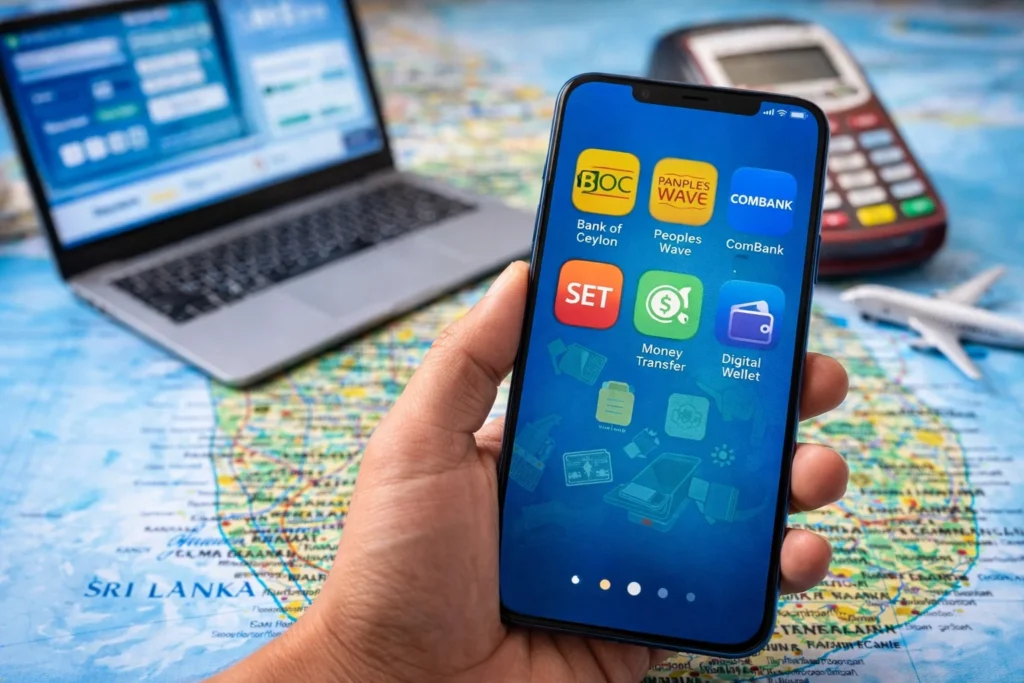
Sri Lanka’s digital payment landscape is rapidly evolving:
Local payment apps:
- FriendsPay: Popular local payment app
- eZ Cash: Mobile wallet service
- mCash: Another mobile payment option
- Bank apps: Most Sri Lankan banks offer mobile banking
Reality for tourists: These apps generally require Sri Lankan bank accounts or local phone numbers, making them impractical for short-term visitors. However, some hotels and restaurants display QR codes for these services.
What works for international visitors:
- Traditional card payments
- Cash
- Occasionally PayPal at online booking sites
- Some tourist businesses accept international payment apps
International Payment Apps
Limited but growing acceptance:
PayPal: Some online booking platforms and a few tourist businesses accept PayPal, but it’s not common for in-person transactions.
Apple Pay/Google Pay: Very limited acceptance. Some international hotels and upscale establishments have contactless terminals, but don’t rely on this.
International wire transfers: Possible for large expenses like extended tours, but involves fees and complexity. Most booking with BlueSky Galle Taxis can be handled via bank transfer if preferred over cards.
Cryptocurrency: Not accepted anywhere for normal tourist transactions. Don’t plan on using crypto in Sri Lanka.
The reality: Sri Lanka remains a cash-and-card economy. Digital payment innovations are emerging but haven’t reached the level of contactless/app-based payments common in the UK, Singapore, or Nordic countries. Plan accordingly!
What to Do If You Run Out of Money
Emergency Money Transfer Services
If you find yourself short on funds, several options exist:
Western Union:
- Multiple locations in Colombo, Kandy, Galle, and major towns
- Someone back home sends money online or at Western Union location
- You collect cash within minutes to hours
- Requires ID (passport)
- Fees vary by amount and sending country (typically 3-10%)
- Reliable and fast for emergencies
MoneyGram:
- Similar to Western Union
- Slightly fewer locations but still available in major cities
- Comparable fees and speed
- Alternative if Western Union unavailable
Bank wire transfer:
- Can be sent to Sri Lankan banks
- Slower (2-5 business days typically)
- Requires finding a bank that will handle it (Commercial Bank, HNB work with international transfers)
- Higher fees but works for large amounts
- More complex process
Credit card cash advance:
- Available at ATMs using credit cards
- Expensive (3-5% fee plus immediate interest)
- Only for true emergencies
- Daily limits may apply
Wise or similar services:
- Can receive transfers from abroad
- Faster than traditional bank transfers
- Lower fees
- Requires having set up account before travel
Currency Regulations and Customs
How Much Currency Can You Bring?
Entering Sri Lanka:
Foreign currency: No limit on the amount of foreign currency (USD, GBP, EUR, etc.) you can bring into Sri Lanka. However:
- Amounts exceeding USD 15,000 (or equivalent) must be declared on arrival
- Declaration uses customs form at airport
- Keep declaration form if you plan to take large amounts out when departing
Sri Lankan Rupees: You cannot bring more than LKR 20,000 into the country. This restriction exists to prevent illegal currency movements.
Practical reality: Most travelers bring well under USD 15,000 equivalent, making declarations unnecessary. However, if carrying significant cash, complete the form to avoid problems on departure.
Declaration Requirements
When declarations are needed:
- Foreign currency exceeding USD 15,000
- Valuable items you’re bringing temporarily (expensive cameras, jewelry, etc.)
- Large amounts of the same item (might be considered commercial)
Why declare:
- Proves you brought currency in legally
- Allows you to take equivalent amounts out legally
- Prevents accusations of illegal earnings in Sri Lanka
- Required by law—non-declaration can result in confiscation
How to declare:
- Complete customs declaration form on arrival
- Present at Red Channel if you have items to declare
- Keep all documentation throughout your trip
- Present when departing if taking significant currency out
Most travelers: Pass through Green Channel (nothing to declare) without issues.
BlueSky Galle Taxis Money Management Tips
After years of helping international travelers, we’ve learned what works:
Book and pay in advance: When you pre-book your airport transfer or multi-day tour with BlueSky Galle Taxis, you can pay by bank transfer or card before arrival. This eliminates immediate cash pressure and lets you exchange money at better rates later.
Use your driver as a resource: Our English-speaking drivers know:
- Best ATM locations along your route
- Trustworthy money changers in each area
- Which establishments accept cards vs. cash-only
- How to help you get correct change for large notes
- Local pricing so you don’t overpay
We’re happy to stop at ATMs or money changers during your tour—just ask!
Plan withdrawals strategically: Discuss your itinerary with us. We’ll advise:
- “Withdraw cash before this section—ATMs are scarce”
- “This area has good money changers with better rates”
- “Your hotel tonight doesn’t accept cards—make sure you have cash”
Emergency assistance: If you face money problems (lost cards, need to find Western Union, must contact your bank), we help:
- Transport to banks or money transfer locations
- Communication assistance with local staff
- Locating embassy or consulate if needed
- Recommendations for solving your specific situation
Payment flexibility: We accept:
- Cash (LKR, USD, GBP, EUR)
- Credit/debit cards
- Bank transfers
- PayPal (for advance bookings)
This flexibility means you choose the most convenient and cost-effective payment method for your situation.
Smart timing: When booking a full-day tour or multi-day package with us, you can:
- Pay partly in advance (secures booking, better exchange rate)
- Pay balance at end of services (flexibility if plans change)
- Split between card and cash (use cash for better rates, card for convenience)
Our goal is making your Sri Lankan experience smooth and stress-free—including money management!
Smart Currency Planning for Your Sri Lankan Adventure
Let’s bring this all together with clear, practical advice:
For UK travelers (and our original questioner): Bring British Pounds—you don’t need to convert to USD first. The rate difference is minimal, and pounds are easily exchanged throughout Sri Lanka. Supplement with ATM withdrawals using a fee-free travel card (Wise, Revolut, Monzo) for the best overall value.
For all international travelers: Your strategy should be:
- Before departure:
- Get a fee-free travel card (Wise, Revolut, or equivalent)
- Notify your banks you’re traveling to Sri Lanka
- Bring moderate cash in your home currency (£200-400 equivalent)
- Have backup cards from different accounts
- Upon arrival:
- Exchange small amount at airport (£50-100 equivalent) OR pre-book your airport transfer with BlueSky Galle Taxis to eliminate immediate cash needs
- Get local SIM card for data access
- Locate ATMs near your accommodation
- Throughout your trip:
- Use ATMs every few days for cash needs
- Pay large expenses (hotels, nice restaurants, tours) by card when possible
- Keep 20,000-40,000 LKR cash for daily needs
- Maintain cash/card balance appropriate to your location
- Exchange at licensed money changers for best rates when exchanging cash
- Safety practices:
- Distribute money across multiple locations
- Use hotel safes for excess cash and backup cards
- Stay aware in crowded areas
- Count all money carefully when exchanging
- Before departing:
- Spend down remaining rupees
- Exchange excess (keeping under 20,000 LKR is legal)
- Keep receipts for your records
The bottom line: Currency management in Sri Lanka is straightforward once you understand the basics. Cards work in cities and tourist areas, cash dominates elsewhere. ATMs are widespread and convenient. Exchange rates for major currencies are competitive. Scams are rare at legitimate establishments.
Don’t overthink it! Bring your home currency, use a fee-free travel card, carry appropriate cash, and you’ll navigate Sri Lankan currency without problems.
Need personalized advice? When you book with BlueSky Galle Taxis, we’re happy to discuss currency strategies for your specific itinerary, recommend trusted money changers along your route, and ensure you’re never stuck without payment options.
Safe travels, and enjoy your Sri Lankan adventure without money worries!