Skip to content
Planning Your Perfect Sri Lankan Journey
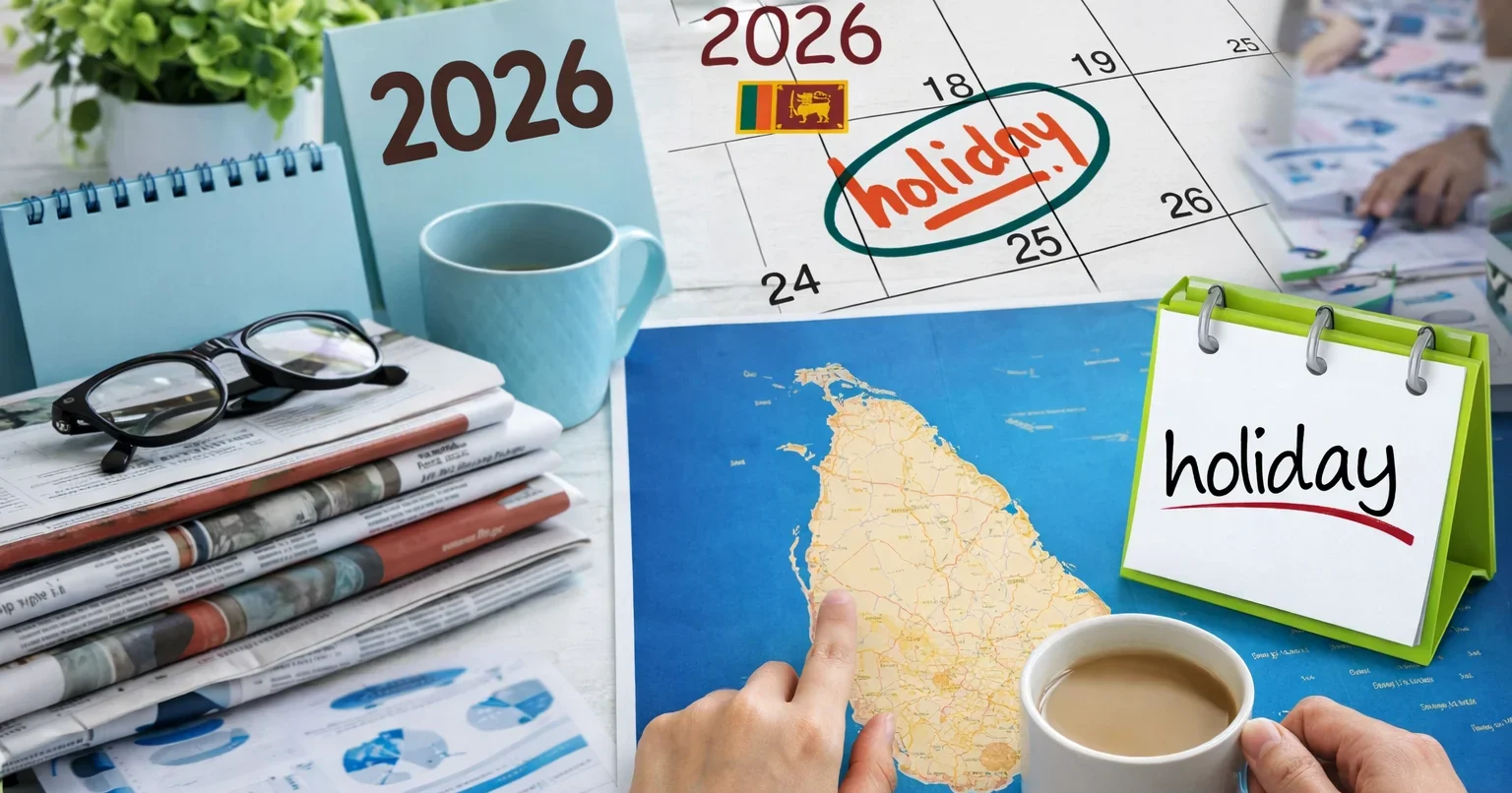
Are you planning a trip to Sri Lanka in 2026 and wondering when to visit? Perhaps you’re curious about those mysterious “Poya days” that appear monthly on Sri Lankan calendars? Or maybe you want to time your visit to witness spectacular cultural festivals that bring ancient traditions to vivid life?
Understanding Sri Lanka’s 2026 holiday calendar is essential for international travelers seeking to maximize their experience on this beautiful island. With over 25 public holidays spanning Buddhist, Christian, Hindu, and Muslim celebrations, Sri Lanka offers travelers unique opportunities to witness authentic cultural events while also presenting practical considerations for planning your itinerary.
This comprehensive guide breaks down every significant holiday in Sri Lanka’s 2026 calendar, explaining what each celebration means, how it affects tourism, and most importantly, how you can use this knowledge to enhance your travel experience. Whether you’re seeking to witness colorful festivals or prefer to travel during quieter periods, this calendar guide will help you make informed decisions.
Let’s dive into the fascinating world of Sri Lankan holidays and discover how to plan your perfect journey!
Understanding Sri Lanka's Unique Holiday Calendar
What Makes Sri Lanka's Calendar Special?
Sri Lanka’s holiday calendar beautifully reflects the nation’s remarkable multicultural identity. Unlike many countries with predominantly single-religion observances, Sri Lanka officially recognizes and celebrates holidays from four major religions: Buddhism, Christianity, Hinduism, and Islam.
This inclusive approach means the island experiences a rich tapestry of celebrations throughout the year. Temple processions might occur one week, followed by church services the next, with Hindu festivals and Islamic observances interspersed throughout. For travelers, this cultural diversity creates countless opportunities to experience authentic traditions and witness celebrations that have remained largely unchanged for centuries.
The lunar calendar influences many Sri Lankan holidays, particularly Buddhist Poya days and some Hindu festivals. This means exact dates shift each year, requiring travelers to check current calendars when planning trips. The government typically announces the official holiday calendar several months in advance, confirming exact dates for the coming year.
Types of Public Holidays in Sri Lanka
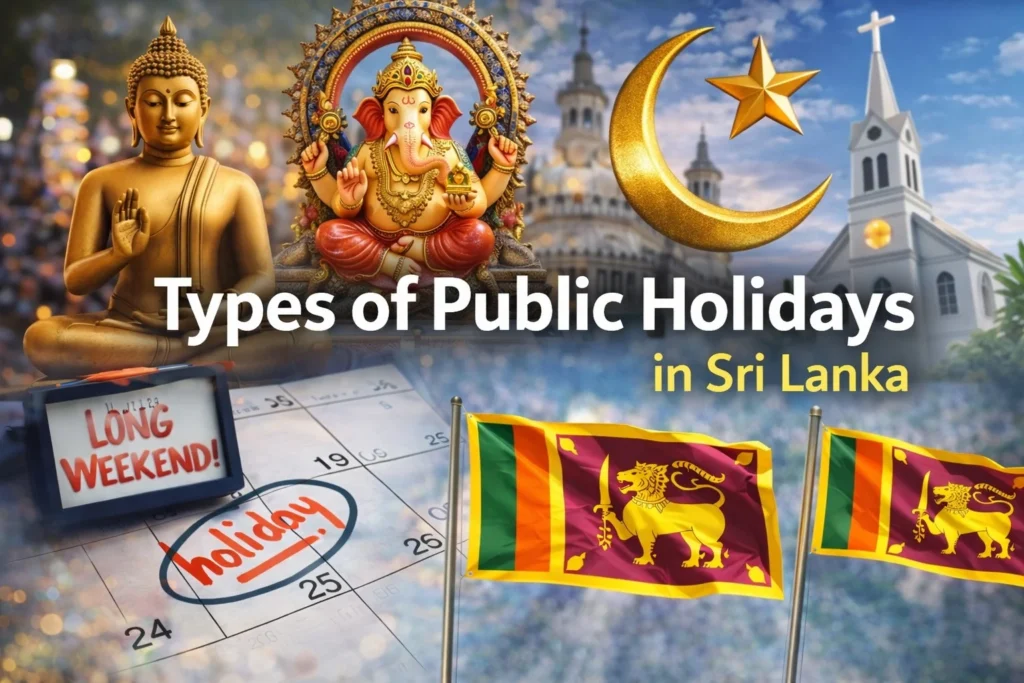
Sri Lankan holidays fall into several categories, each with different implications for travelers:
Poya Days occur every full moon (approximately once monthly) and are Buddhist religious holidays. These are full public holidays when alcohol sales are prohibited, and many businesses close. There are 12 Poya days annually, with four particularly significant: Duruthu Poya (January), Vesak Poya (May), Poson Poya (June), and Esala Poya (July or August).
Religious holidays from other faiths including Christmas, Good Friday, Deepavali, Thai Pongal, Id Ul Fitr, Id Ul Adha, and Milad Un Nabi. These are full public holidays affecting specific communities most directly but celebrated nationally.
National holidays commemorate important dates in Sri Lankan history including Independence Day (February 4) and National Heroes Day. These typically feature official ceremonies and patriotic celebrations.
Bank holidays when financial institutions close but other businesses may remain open. December 26th traditionally serves as a bank holiday.
Festival periods that might not be official holidays but significantly impact tourism, such as the Kandy Esala Perahera procession period.
How Holidays Affect Tourism
Understanding how holidays impact your visit helps you plan more effectively:
Positive impacts for travelers:
- Opportunity to witness authentic cultural celebrations and ceremonies
- Colorful processions, decorations, and festive atmospheres
- Special foods and traditional dishes prepared for specific holidays
- Cultural immersion experiences not available during ordinary days
- Unique photography opportunities
- Fewer international tourists during some religious holidays
Considerations to keep in mind:
- Banks, government offices, and some shops close on public holidays
- Alcohol sales prohibited on Poya days (hotels with licenses may serve registered guests)
- Popular pilgrimage sites become extremely crowded during major Buddhist holidays
- Transportation may be limited or more expensive during peak travel holidays
- Advance booking essential for accommodation during major festival periods
- Some attractions may have modified hours or increased entrance fees
Complete 2026 Sri Lanka Holiday Calendar
January 2026 Holidays
January 3 (Saturday) – Duruthu Full Moon Poya Day The first Poya day of 2026 commemorates Buddha’s first visit to Sri Lanka. Major celebrations occur at Kelaniya Raja Maha Vihara temple near Colombo, where thousands of pilgrims gather for special ceremonies. This Poya day sees significant temple decorations and processions, making it an excellent opportunity for cultural observation.
Travel Impact: Banks and government offices closed. Alcohol sales prohibited. Expect crowds at major temples, particularly in Colombo area. Being a Saturday, the public holiday extends into a long weekend for many workers.
January 15 (Thursday) – Tamil Thai Pongal Day This Tamil harvest festival celebrates the sun god and marks the beginning of the Tamil month of Thai. Families prepare special pongal (sweet rice dish) that’s ceremonially allowed to boil over—symbolizing abundance and prosperity. Celebrations are most vibrant in Tamil-majority areas of the north and east, and in areas like Colombo with significant Tamil populations.
Travel Impact: Shops in Tamil areas may close. Excellent opportunity to experience Tamil culture and cuisine. Jaffna and eastern towns offer the most authentic celebrations. Mid-week holiday allows relatively normal tourism operations elsewhere.
February 2026 Holidays
February 1 (Sunday) – Navam Full Moon Poya Day Commemorates Buddha’s announcement of his impending death and his appointment of no successor. Significant celebrations occur at Gangaramaya Temple in Colombo, which hosts the Navam Perahera—a grand procession featuring decorated elephants, traditional dancers, and drummers.
Travel Impact: Colombo becomes particularly festive. The Navam Perahera (usually held around this Poya) attracts large crowds. Being a Sunday means minimal additional business disruption. Book Colombo accommodation early if visiting during this period.
February 4 (Wednesday) – Independence Day Sri Lanka’s National Day commemorates independence from British rule in 1948. Official celebrations center in Colombo with military parades, cultural performances, and patriotic displays. The President addresses the nation, and schools, government buildings, and streets display national flags.
Travel Impact: Government offices and some businesses closed. Colombo hosts main celebrations with potential road closures. Excellent time to witness Sri Lankan national pride and patriotism. Mid-week holiday creates a break in normal business operations.
February 15 (Sunday) – Maha Shivaratri Day The “Great Night of Shiva” is one of Hinduism’s most important festivals. Devotees fast during the day and hold vigil throughout the night at Shiva temples, offering prayers and special rituals. The most significant celebrations occur at Shiva temples in Colombo, Trincomalee, and throughout the north.
Travel Impact: Hindu temples see increased activity throughout the night. Excellent opportunity to observe Hindu religious practices. Some shops in Hindu areas may close or have limited hours. Being a Sunday, minimal impact on regular business operations.
March 2026 Holidays
March 2 (Monday) – Medin Full Moon Poya Day Commemorates Buddha’s first visit to his father’s palace after enlightenment. Temple ceremonies and dana (almsgiving) characterize this Poya day.
Travel Impact: Standard Poya day restrictions apply—no alcohol sales, bank closures, increased temple activity. Monday holiday creates a long weekend when combined with the previous weekend, potentially increasing domestic tourism.
March 21 (Saturday) – Id Ul Fitr (Ramadan Festival Day) Marks the end of Ramadan, the Islamic holy month of fasting. Muslim communities celebrate with special prayers, feasting, new clothes, and charity. Celebrations are particularly vibrant in Colombo’s Pettah area, the east coast, and areas with significant Muslim populations.
Travel Impact: Many Muslim-owned businesses close for the day. Special foods available at Muslim restaurants and households. Excellent opportunity to experience Islamic Sri Lankan culture. Saturday timing means extended weekend celebration for many.
April 2026 Holidays
April 1 (Wednesday) – Bak Full Moon Poya Day Commemorates Buddha’s second visit to Sri Lanka. Temple activities increase throughout the island.
Travel Impact: Standard Poya day restrictions. Coincides with the beginning of Sri Lanka’s inter-monsoon period with occasional showers. Mid-week holiday breaks regular business rhythm.
April 3 (Friday) – Good Friday Christian communities observe the crucifixion of Jesus Christ. Churches hold solemn services, and the day maintains a respectful, quiet atmosphere particularly in Christian-majority areas like Negombo.
Travel Impact: Christian businesses and some general businesses close. Churches hold special services welcoming visitors. Quieter day overall with limited entertainment options. Friday holiday creates a long weekend for Easter observances.
April 13 (Monday) – Day Prior to Sinhala and Tamil New Year Day The preparation day before New Year sees families cleaning homes, cooking traditional foods, and preparing for the auspicious New Year transition. The “neutral period” (nonagathe) when the sun transitions between astrological houses typically falls on this day, with families observing stillness before the new year begins.
Travel Impact: Many businesses begin closing. Public transportation starts reducing services. Stock up on essentials as shops may close early. Domestic travel increases significantly as people head to ancestral homes. Book accommodation well in advance.
April 14 (Tuesday) – Sinhala and Tamil New Year Day One of Sri Lanka’s most important cultural celebrations! The Sinhala and Tamil New Year marks the end of harvest season and astrological new year. Families light hearths at auspicious times, prepare traditional sweets, play traditional games, and exchange gifts. The entire nation essentially stops for 2-3 days of celebration.
Travel Impact: Major holiday—virtually everything closes including many hotels and restaurants. Public transportation significantly reduced. Most Sri Lankans travel to ancestral homes. If visiting during this time, book accommodation well in advance and expect a quiet, traditional atmosphere. Excellent opportunity to witness authentic cultural traditions if you have local connections. Two consecutive holiday days (April 13-14) create an extended break.
May 2026 Holidays
May 1 (Friday) – Vesak Full Moon Poya Day / May Day (International Workers’ Day) This unique date sees two significant holidays coinciding! Vesak is Buddhism’s most sacred holiday, celebrating Buddha’s birth, enlightenment, and death (all believed to have occurred on full moon days). The entire country transforms with elaborate lanterns (Vesak koodu), colorful pandals (structures depicting Buddhist stories), free food and drink stalls (dansala), decorations, and temple ceremonies. Simultaneously, May Day sees labor unions organize rallies and processions.
Travel Impact: Absolutely essential to book accommodation many months in advance. Alcohol sales prohibited. Roads near major celebrations experience heavy congestion. Businesses close for 2-3 days. The combination of Vesak and May Day creates intensified closures and celebrations. Despite logistical challenges, this is possibly the most spectacular cultural experience Sri Lanka offers.
May 2 (Saturday) – Day Following Vesak Full Moon Poya Day The government declares both the Poya day and following day as holidays, creating an extended celebration period. Vesak festivities continue with pandal viewings, dansala visits, and temple ceremonies.
Travel Impact: Extended holiday weekend (May 1-3, including Sunday) means 3-day celebration period. Most services remain closed. Roads stay congested. Hotels that accepted bookings will be fully occupied. Plan to stay in one location during this period rather than traveling.
May 28 (Thursday) – Id Ul Adha (Hadji Festival Day) The “Festival of Sacrifice” is Islam’s second major celebration. Muslims commemorate Abraham’s willingness to sacrifice his son, performing special prayers and sharing meat with family, friends, and the poor.
Travel Impact: Muslim communities celebrate with feasting and family gatherings. Some businesses in Muslim areas close. Opportunity to experience Islamic Sri Lankan culture and traditional foods. Mid-week holiday creates a break in normal routines.
May 30 (Saturday) – Adhi Poson Full Moon Poya Day This is actually the day before the official Poson Poya celebration, serving as a preparation day. Pilgrims begin traveling to Anuradhapura and Mihintale for the following day’s major commemorations.
Travel Impact: Anuradhapura and Mihintale begin experiencing increased pilgrim arrivals. Standard Poya day restrictions apply. Saturday timing means the start of a long weekend of celebrations.
June 2026 Holidays
June 29 (Monday) – Poson Full Moon Poya Day One of the most significant Poya days, Poson commemorates the introduction of Buddhism to Sri Lanka in the 3rd century BCE. Anuradhapura and Mihintale become the center of celebrations, with hundreds of thousands of pilgrims climbing Mihintale (where Buddhism was first preached on the island) for ceremonies.
Travel Impact: Anuradhapura and Mihintale extremely crowded—book accommodation months ahead if visiting these cities. One of the most important pilgrimage dates. Standard Poya restrictions apply—banks closed, alcohol prohibited. Consider experiencing this significant historical commemoration but prepare for crowds and limited accommodation availability. Monday holiday creates potential long weekend.
July 2026 Holidays
July 29 (Wednesday) – Esala Full Moon Poya Day Commemorates Buddha’s first sermon after enlightenment. This Poya day marks the ceremonial culmination of the famous Kandy Esala Perahera, with the grand final procession typically occurring on or near this full moon night. The two-week perahera period builds to this spectacular finale.
Travel Impact: Kandy becomes extremely crowded during the entire perahera period leading up to this Poya. Book Kandy accommodation 6-12 months in advance. The final procession on or around this date is the most elaborate and crowded. Standard Poya day restrictions apply. Mid-summer period with southwest monsoon affecting western and southern coasts—consider eastern and northern regions for better weather. Mid-week holiday.
August 2026 Holidays
August 26 (Wednesday) – Milad Un Nabi (Holy Prophet’s Birthday) Celebrates the birth of Prophet Muhammad. Mosques hold special prayers and religious gatherings. Muslim communities organize processions and religious discussions.
Travel Impact: Muslim areas may have limited business operations. Opportunity to observe Islamic celebrations. Mosques welcome respectful visitors interested in learning about the faith. Mid-week holiday affects primarily Muslim businesses while broader tourism continues normally.
August 27 (Thursday) – Nikini Full Moon Poya Day Commemorates the first Buddhist Council held after Buddha’s passing. Temple ceremonies and religious observances occur nationwide.
Travel Impact: Standard Poya day restrictions apply. Back-to-back holidays (August 26-27) create an extended break. Shoulder season for tourism with good travel deals available and fewer crowds at major attractions.
September 2026 Holidays
September 26 (Saturday) – Binara Full Moon Poya Day Commemorates Buddha’s visit to heaven to preach to his mother. Temple activities and almsgiving ceremonies characterize this observance.
Travel Impact: Standard Poya restrictions. Saturday holiday means minimal additional business disruption. Good time for travel with improving weather in many regions as southwest monsoon weakens. Weekend timing allows domestic tourists to participate in temple activities without taking work leave.
October 2026 Holidays
October 25 (Sunday) – Vap Full Moon Poya Day Commemorates Buddha’s return from heaven. Marks the beginning of the Kathina season when devotees offer robes to monks. Temple ceremonies and religious activities occur throughout the island.
Travel Impact: Standard Poya day restrictions. Sunday timing means minimal impact on regular business operations. Excellent weather begins on southern and western coasts—good time to combine cultural experiences with beach visits. Start of peak tourism season approaching.
November 2026 Holidays
November 8 (Sunday) – Deepavali Festival Day The Hindu festival of lights celebrates the victory of light over darkness, good over evil. Families light oil lamps, create colorful kolam (rice flour designs), prepare sweets, and set off fireworks. Tamil areas, particularly in the north, east, and Colombo’s Tamil neighborhoods, celebrate most vibrantly.
Travel Impact: Excellent cultural experience opportunity. Some businesses in Hindu areas close. Beautiful nighttime lamp displays. Try traditional Deepavali sweets and snacks available at shops and restaurants. Sunday timing means extended weekend celebration without disrupting weekday business significantly.
November 24 (Tuesday) – Il Full Moon Poya Day Commemorates Buddha’s ordination of 60 disciples who became enlightened. The final major Poya day before the busy December season. Marks the continuation of the Kathina season when devotees offer robes to monks.
Travel Impact: Standard Poya restrictions. Mid-week holiday. Peak tourist season well underway with excellent weather throughout most of the island. Hotels and attractions busy as international visitor numbers increase for the high season.
December 2026 Holidays
December 23 (Wednesday) – Unduvap Full Moon Poya Day The final Poya day of 2026 commemorates the arrival in Sri Lanka of the sacred Bo tree sapling (from the tree under which Buddha attained enlightenment). Special ceremonies occur at Anuradhapura where the ancient tree still grows—one of the oldest historically documented trees in the world.
Travel Impact: Standard Poya restrictions apply just two days before Christmas. Anuradhapura sees increased pilgrim activity. The proximity to Christmas creates interesting dual observances—Buddhist devotees visiting temples while Christmas preparations accelerate. Alcohol restrictions affect Christmas Eve preparations. Peak tourist season with premium pricing and full hotels.
December 25 (Friday) – Christmas Day Christian communities celebrate Christmas with midnight masses, family gatherings, traditional Christmas cakes, and feasting. The holiday has become somewhat secular with decorations appearing in malls and hotels throughout December. Many Sri Lankans of all faiths participate in the festive season.
Travel Impact: Peak tourist season with maximum pricing. Book accommodation and special Christmas dinners many months in advance. Beaches and tourist attractions extremely busy. Excellent weather throughout southern and western regions. Friday holiday creates a long weekend into the following week, extending celebrations. Christian businesses close but hotels and tourist services operate at full capacity with special holiday programs.
Buddhist Poya Days Explained for Travelers
What Are Poya Days?
Poya days are uniquely Sri Lankan full moon holidays that occur approximately every 29-30 days when the moon is full. These Buddhist observance days are public holidays throughout Sri Lanka, regardless of one’s religion.
The tradition connects to Buddhism’s emphasis on the full moon as spiritually significant. Many important events in Buddha’s life—his birth, enlightenment, first sermon, and death—are believed to have occurred on full moon days.
During Poya days, devout Buddhists wear white clothing, visit temples to make offerings, observe the eight precepts (including abstaining from entertainment and eating after noon), listen to religious sermons, and engage in meditation. Temples fill with worshippers, particularly in the evening, creating beautiful scenes of devotion with oil lamps, incense, and flowers.
For travelers, Poya days offer fascinating glimpses into Buddhist religious practice while also requiring some practical adjustments.
How Poya Days Affect Your Visit
What's prohibited or restricted on Poya days:
What’s prohibited or restricted on Poya days:
Alcohol sales are banned throughout Sri Lanka on Poya days. Liquor stores close completely, and restaurants cannot sell alcohol. However, licensed hotels may serve alcohol to registered guests staying in their rooms—policies vary by establishment, so check with your hotel if this concerns you.
Entertainment venues including cinemas, nightclubs, and some theaters traditionally close on Poya days, though enforcement has become less strict in tourist areas in recent years.
Meat sales are discouraged though not officially prohibited. Some butcher shops and meat markets close, while others remain open. Many Buddhists eat vegetarian on Poya days, so restaurants often feature expanded vegetarian menus.
Banking and government services close entirely, as Poya days are full public holidays.
What remains open:
Tourist attractions including national parks, museums, and historical sites generally remain open, sometimes with modified hours.
Hotels, guesthouses, and tourist accommodation operate normally.
Restaurants stay open, though alcohol service is restricted.
Private transportation including taxis and tourist vehicles operate normally (BlueSky Galle Taxis provides full service on all Poya days).
Shops may have reduced hours but many remain open, particularly in tourist areas.
Best Poya Days to Experience
While all Poya days follow similar patterns, four carry special significance worth experiencing:
Vesak Poya (May) is absolutely the most spectacular! The entire island transforms into a festival of lights with elaborate lanterns, pandals (large illuminated structures depicting Buddhist stories), and dansala (free food and drink stalls). Streets glow with decorations, and the atmosphere is magical. Despite logistical challenges, witnessing Vesak ranks among Sri Lanka’s most unforgettable cultural experiences.
Poson Poya (June) commemorates Buddhism’s arrival in Sri Lanka. Anuradhapura and particularly Mihintale (where Buddhism was first preached) become pilgrimage centers with hundreds of thousands of worshippers climbing the ancient steps in white clothing. The historical significance and sheer number of devotees make this extraordinarily moving to witness.
Esala Poya (July/August) marks the beginning of the Kandy Esala Perahera preparation period. While the main processions occur in the following two weeks, the Poya day itself features special ceremonies at the Temple of the Tooth Relic.
Duruthu Poya (January) marks Buddha’s first visit to Sri Lanka. Kelaniya Raja Maha Vihara near Colombo hosts significant celebrations with processions, making it accessible for travelers staying in or near the capital.
Major Cultural Festivals International Travelers Shouldn't Miss
Vesak Festival – The Buddhist Celebration of Light

Vesak deserves extended discussion as it represents Sri Lankan Buddhist culture at its most vibrant and beautiful.
The preparation begins weeks before the actual Poya day. Communities construct elaborate pandals—bamboo structures covered with illustrations depicting Buddhist Jataka tales (stories of Buddha’s past lives). Artists spend months creating these intricate panels, which are illuminated at night and displayed free for public viewing.
Families create lanterns (Vesak koodu) in every imaginable shape—stars, lotuses, elephants, temples—from thin paper and bamboo frames. These are lit with small oil lamps or electric lights and hung from homes, trees, and street poles.
Dansalas (free food and drink stalls) appear on virtually every street. Community groups and wealthy families sponsor these, offering free refreshments to anyone who passes. The tradition stems from the Buddhist practice of dana (giving) and creates a remarkably generous atmosphere—you can walk through neighborhoods receiving free food and drinks everywhere!
Buddhist devotees wear white and visit temples throughout the day and evening. Temples decorate elaborately with lights, flowers, and lanterns. Evening ceremonies feature special chanting, meditation, and religious talks.
The entire country essentially stops normal activity for 2-3 days. Even non-Buddhists participate in the festive atmosphere, visiting pandals and enjoying dansalas.
Best locations to experience Vesak:
- Colombo (largest concentration of pandals and dansalas)
- Kandy (sacred city atmosphere)
- Anuradhapura (historic significance)
- Even small towns create beautiful displays
Esala Perahera – The Grand Procession
The Kandy Esala Perahera ranks among Asia’s grandest Buddhist processions and represents one of Sri Lanka’s most famous cultural events.
Held over two weeks in July or August (building to a crescendo on the Nikini Poya full moon day), the perahera (procession) features:
- The sacred tooth relic of Buddha carried in a golden casket on the back of a magnificently decorated elephant
- Over 100 elephants dressed in elaborate costumes with LED lights (in modern times)
- Traditional Kandyan dancers in ornate costumes performing ancient dances
- Fire dancers, acrobats, and whip crackers
- Four separate devale (temple) processions honoring Hindu deities
- Thousands of participants in historical costumes
- Drummers creating deafening rhythms
The procession occurs nightly, growing larger and more elaborate each evening, culminating in the grand final procession on the Poya full moon night.
The spectacle is breathtaking—elephants parade through streets lit by thousands of torches and lights, traditional drumming echoes off buildings, and the ancient traditions come alive before your eyes.
Important planning notes:
- Book Kandy accommodation 6-12 months in advance
- Paid seating areas offer best views and photography opportunities
- Free viewing spots along the route get extremely crowded
- Arrive several hours early to secure good positions
- The procession typically begins around 8 PM and continues for 2-3 hours
Sinhala and Tamil New Year
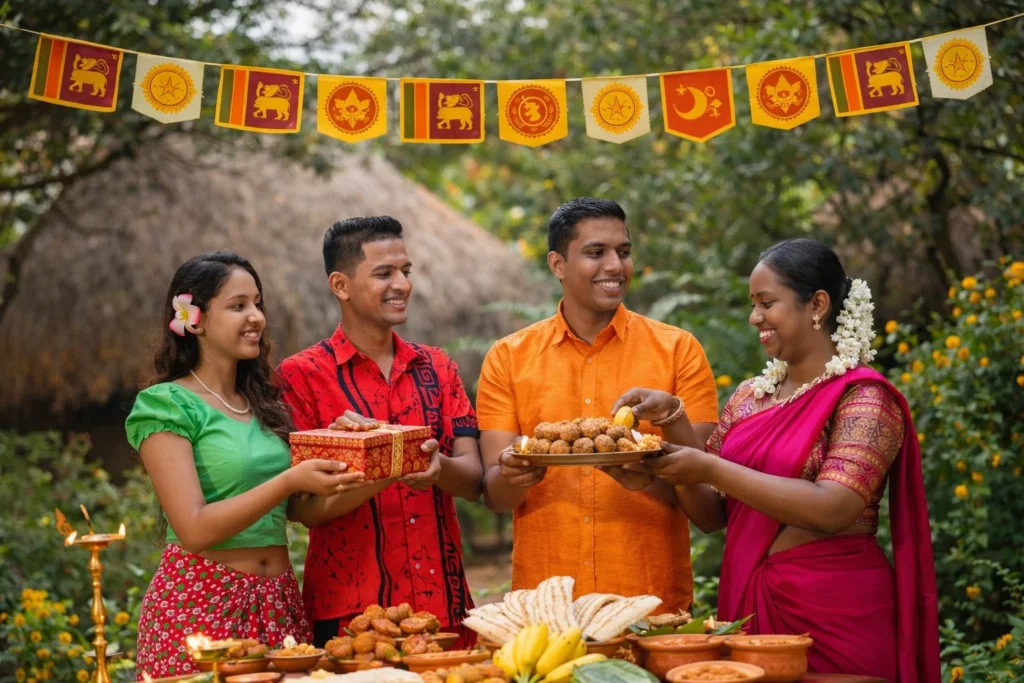
This April celebration represents Sri Lanka’s most important cultural and family holiday—think of it as combining New Year’s, Thanksgiving, and major family reunion into one multi-day celebration!
The New Year follows ancient astrological traditions. There’s a specific “neutral period” (nonagathe) when the sun transitions from one house to the zodiac to another. During this time (usually a few hours), families stop all activity—no cooking, eating, working, or even switching on lights. It’s a moment of stillness before the new year begins.
Once the auspicious time arrives (announced by astrologers and broadcast on TV), families light the hearth for the first meal, wear new clothes, exchange money (symbolizing prosperity), anoint heads with herbal oil, play traditional games, and share special sweets.
Traditional New Year foods include:
- Kiribath (milk rice)—white rice cooked in coconut milk
- Kavum—deep-fried sweets made from rice flour and treacle
- Kokis—crispy twisted cookies
- Athirasa—fried sweet rounds
- Aluwa—soft candy made from rice flour, sugar, and cashews
Traditional games include:
- Raban hitting (drumming)
- Kana mutti bindeema (breaking the pot while blindfolded—like a piñata)
- Pillow fighting on a greased log
- Lime-and-spoon races
- Tug-of-war
Travel considerations: This is primarily a private family celebration rather than public festival. Most Sri Lankans travel to ancestral villages to celebrate with extended family. Tourist services significantly reduce—many hotels, restaurants, and even some tourist attractions close for 2-3 days.
If visiting during this period, book accommodation well in advance and expect a quiet, peaceful atmosphere. The upside: you’ll experience an authentically traditional Sri Lanka without crowds. If you have local friends or contacts, this offers unparalleled opportunities to witness family traditions firsthand.
Deepavali – The Festival of Lights

While Deepavali (also called Diwali) is primarily a Hindu celebration, Sri Lanka’s Tamil Hindu communities celebrate with vibrant enthusiasm, particularly in northern and eastern regions and Colombo’s Tamil neighborhoods.
The festival celebrates the victory of light over darkness—symbolically representing good triumphing over evil, knowledge over ignorance.
Families clean and decorate homes, create intricate kolam (designs made from colored rice flour or powder) at entrances, light oil lamps (diyas) in and around homes, prepare special sweets and snacks, wear new clothes, exchange gifts, and conduct prayers to Lakshmi (goddess of prosperity).
The nighttime scenes are magical—neighborhoods glow with thousands of small oil lamps, creating a beautiful warm ambiance. Fireworks light up the sky (though less extensively than in India).
Best places to experience Deepavali:
- Jaffna (most authentic and vibrant)
- Colombo’s Tamil areas (Wellawatte, Bambalapitiya)
- Trincomalee
- Batticaloa
Many shops and restaurants in Tamil areas sell special Deepavali sweets in the days leading up to the festival—murukku (spiral-shaped savory snacks), ladoo (sweet balls), and various other traditional treats. Don’t miss trying these!
Best Time to Visit Sri Lanka Based on 2026 Holidays
High Season Travel (December – March)
December through March represents Sri Lanka’s peak tourism season, with the best weather along western and southern coasts. This period overlaps with several significant holidays that enhance the travel experience:
Christmas and New Year (December 25-26, January 1) bring festive atmosphere with decorations, special events, beach parties, and celebrations. The holiday season creates vibrant energy perfect for travelers. However, expect premium pricing and crowds. Book everything months in advance.
Thai Pongal (January 15) offers excellent opportunities to experience Tamil harvest traditions, particularly in Jaffna and eastern regions. Combine cultural observation with perfect beach weather on the east coast.
Independence Day (February 4) provides chances to witness Sri Lankan national pride with parades and celebrations, primarily in Colombo. The patriotic displays and cultural performances offer insights into modern Sri Lankan identity.
Advantages of high season travel:
- Guaranteed excellent weather for beaches, water sports, and outdoor activities
- All tourism services operating at full capacity
- Calm seas ideal for whale watching, snorkeling, and diving
- Festive holiday atmosphere in December
- Minimal rainfall on west and south coasts
Considerations:
- Highest prices for accommodation and some activities
- Popular attractions crowded, particularly Yala National Park
- Need to book well in advance
- Beach towns busy with both international and domestic tourists
Shoulder Season Opportunities (April – June, September – November)
These months offer excellent value with significantly fewer tourists and good opportunities to experience cultural festivals, though weather becomes more variable.
April (Sinhala and Tamil New Year, Good Friday, Bak Poya) presents unique opportunities for cultural immersion. While New Year closures require planning, witnessing this authentic family-oriented celebration offers rare insights into Sri Lankan traditions. The inter-monsoon period brings occasional showers but also lush landscapes and fewer crowds.
May (Vesak and Poson Poya) ranks as THE cultural highlight of the year! Despite being the beginning of monsoon season on southwestern coasts, Vesak’s spectacular celebrations justify visiting during this period. Anuradhapura and Kandy offer particularly moving experiences. The east coast actually enjoys excellent weather in May, providing good alternative beach options.
September-November sees improving weather as monsoons end. Poya days continue monthly, offering regular opportunities to observe Buddhist traditions. These months provide excellent value—hotels reduce rates significantly, attractions are less crowded, and services remain excellent. The landscape glows with post-monsoon greenery.
Advantages of shoulder season:
- Significantly lower accommodation costs (sometimes 30-50% less)
- Far fewer tourists at major attractions
- Opportunity to witness major festivals (especially Vesak)
- More authentic, less commercialized experiences
- Easier to book last-minute accommodations and tours
Considerations:
- Southwest monsoon affects west and south coasts May-September (though rain is often short afternoon showers, not all-day downpours)
- Some beach activities may be limited by rough seas
- Northeast monsoon affects east coast October-January
- Need flexibility in plans due to weather variability
Transportation Solutions with BlueSky Galle Taxis
Holiday Period Transfers
Public transportation becomes unreliable during major holidays, with reduced schedules or complete closures. BlueSky Galle Taxis ensures you maintain mobility regardless of holiday calendars.
Airport transfers: We operate 365 days yearly, including all public holidays. Your flight doesn’t care if it’s Vesak Poya or New Year—neither do we! Pre-book your airport transfer for guaranteed pickup regardless of arrival date.
Inter-city transfers: When buses stop running and train schedules become unpredictable during holidays, private transfers keep you moving. We provide comfortable, air-conditioned transport between any Sri Lankan destinations.
Festival attendance: Want to witness the Kandy Esala Perahera but worried about getting there? We handle all transportation logistics, dropping you at optimal viewing locations and ensuring safe return transport after events conclude.
Holiday period advantages of booking with BlueSky Galle Taxis:
- Guaranteed availability when public transport fails
- Fixed pricing—no surge charges during holidays
- English-speaking drivers who understand both tourism needs and holiday logistics
- Flight tracking for airport pickups (no worries if your flight is delayed)
- Modern, well-maintained vehicles with air conditioning
- Child safety seats available upon request
- 24/7 customer support via phone and WhatsApp
- Flexible scheduling around your plans
Festival Tour Packages
We design custom touring itineraries around Sri Lankan festivals, combining cultural experiences with comfortable travel:
Vesak Experience Tour:
- Evening tours through best-decorated Colombo neighborhoods
- Visits to major pandals with time for photography
- Dansala experiences (sampling free refreshments at community stalls)
- Temple visits during evening ceremonies
- Transport handles all logistics while you enjoy the festivities
Kandy Esala Perahera Package:
- Transfers from coastal hotels to Kandy
- Accommodation booking assistance
- Reserved seating arrangements for procession viewing
- Daytime sightseeing (Temple of the Tooth, Peradeniya Gardens, tea plantations)
- Return coastal transport after your chosen duration
New Year Cultural Experience:
- Village visits to witness authentic New Year traditions (arranged with advance notice and local contacts)
- Participation in traditional games and customs
- Traditional New Year meals
- Temple visits during New Year blessing ceremonies
Multi-day festival circuits:
- Combine several festivals in one trip
- Connect cultural experiences with wildlife safaris, beach relaxation, and historical site visits
- Logical routing that maximizes experiences while minimizing unnecessary travel time
Custom itinerary design: Contact us with your interests, travel dates, and preferences. We design personalized touring plans that align with holidays on Sri Lanka’s calendar, ensuring you experience the island’s cultural richness while maintaining comfortable, reliable transportation throughout your journey.
Reliable Service During Peak Times
Peak holiday periods challenge even experienced travelers. BlueSky Galle Taxis provides stability amid holiday chaos:
No surge pricing: Unlike ride-hailing apps that multiply prices during high-demand periods, our rates remain consistent. Holiday period pricing stays the same as any other day—no surprises.
Advance booking priority: Clients who book ahead receive guaranteed service even when demand spikes. We maintain capacity specifically for pre-booked customers, ensuring reliability.
Local knowledge: Our drivers know alternative routes when main roads clog with holiday traffic, which temples are most accessible during crowded Poya days, and which areas experience the best festival atmospheres. This insider knowledge dramatically improves your experience.
Communication: English-speaking drivers eliminate language barriers. They explain what’s happening during festivals, share cultural insights, and serve as informal cultural ambassadors—transforming transportation from mere logistics into educational experiences.
Safety priority: Holiday periods sometimes see increased traffic accidents as occasional drivers take to roads and celebrations involve late nights. Our professional drivers maintain safety standards regardless of surrounding holiday chaos.
Flexibility: Holiday plans often require adjustments—temple ceremonies run late, weather affects festivals, or you discover unexpected celebrations you’d like to witness. We accommodate schedule changes when possible, understanding that holiday travel requires flexibility.
Contact BlueSky Galle Taxis well before your Sri Lankan holiday visit. We’ll discuss the specific holidays occurring during your dates, plan optimal itineraries, and ensure seamless transportation throughout your journey.
FAQs
Poya days are monthly full moon Buddhist holidays—Sri Lanka has 12 each year, all public holidays. On Poya days, banks and government offices close, and alcohol sales are prohibited nationwide (though licensed hotels may serve registered guests). Meat sales are discouraged, and many Sri Lankans visit temples wearing white clothing. Tourist attractions usually remain open with possible modified hours, hotels and restaurants operate normally (except alcohol service), and private transportation continues as usual. The four most significant Poya days are Duruthu (January), Vesak (May), Poson (June), and Esala (July/August), which see the largest celebrations and potential service disruptions. For travelers, Poya days offer excellent opportunities to witness authentic Buddhist traditions—temples become very active with ceremonies, decorations, and worshippers. The main practical impact is alcohol unavailability and increased temple crowds, both manageable with advance awareness.
May 1-2, 2026 (Vesak) is absolutely the most spectacular cultural celebration—the entire country transforms into a festival of lights with elaborate lanterns, pandals, and dansalas. Despite some logistical challenges (accommodation books out months early, alcohol prohibited, many businesses closed), Vesak offers Sri Lanka’s most unforgettable cultural experience. July-August 2026 (exact dates TBD) for the Kandy Esala Perahera ranks second—this grand procession features over 100 decorated elephants, traditional dancers, and spectacular nighttime pageantry. December 25-26, 2026 for Christmas and New Year celebrations combines perfect beach weather with festive atmosphere, fireworks, and special events. April 14-15, 2026 (Sinhala and Tamil New Year) offers authentic cultural immersion if you’re interested in traditional family celebrations, though most services close. November 8, 2026 (Deepavali) provides beautiful Festival of Lights celebrations, particularly in Tamil areas. Each festival offers unique experiences—choose based on your cultural interests and tolerance for holiday logistics!
It depends on the specific holiday and type of business. On regular Poya days (monthly), banks and government offices close, but most tourist attractions, hotels, restaurants, and private businesses remain open with possible reduced hours. During major festivals like Vesak (May 1-2) and Sinhala/Tamil New Year (April 14-15), widespread closures occur for 2-3 days—even many hotels and restaurants close as staff celebrate with families. Public transportation significantly reduces or stops entirely during these major holidays. Tourist attractions generally remain open throughout holiday periods, though some may have modified hours. Christian businesses may close on Christmas and Good Friday, Hindu businesses during Deepavali and Thai Pongal, Muslim businesses during Id festivals—but these closures affect specific communities rather than the entire economy. The safest approach: research specific holidays falling within your travel dates, book accommodation and transportation in advance, and maintain flexible plans. Private transportation services like BlueSky Galle Taxis operate 365 days yearly, providing reliability when public services fail during holidays.
Alcohol sales are prohibited throughout Sri Lanka on all Poya days (12 per year, occurring each full moon). Liquor stores close completely and restaurants/bars cannot sell alcohol. However, there are exceptions: licensed hotels can typically serve alcohol to registered guests in their rooms (though policies vary—confirm with your specific hotel), hotel room mini-bars remain accessible to guests, and some high-end restaurants in major tourist areas may serve alcohol discreetly to foreigners. The prohibition is cultural rather than strictly enforced against tourists, but visitors should respect these traditions. Practical strategies include purchasing alcohol the day before Poya if you want drinks in your room, confirming your hotel’s specific policy when booking, and considering Poya days as opportunities to try Sri Lanka’s excellent fruit juices, lassis, and other non-alcoholic beverages. The alcohol restrictions affect only Poya days—all other days see normal alcohol availability. Don’t let this deter your visit—many travelers find Poya days excellent for cultural activities like temple visits naturally aligned with the spiritual focus!
Booking timelines vary dramatically by specific holiday: For Christmas/New Year (Dec 20-Jan 5) and Vesak weekend (May 1-3), book 6-12 months in advance—these are absolute peak periods when the best properties sell out a year ahead. For the Kandy Esala Perahera (July/August), book Kandy accommodation 6-12 months early as the city’s limited rooms disappear quickly. For Poson Poya in Anuradhapura (June) and Sinhala/Tamil New Year (April 14-15), book 2-4 months ahead as these see significant domestic travel creating scarcity. For regular monthly Poya days and other religious holidays (Thai Pongal, Deepavali, Id festivals), standard 2-4 week booking windows usually suffice. Transportation is equally important—BlueSky Galle Taxis recommends booking private transfers and tours at least 4-6 weeks before major holidays to guarantee availability and lock in rates. Public transportation becomes unreliable during major holidays, so pre-arranged private transport becomes essential. If you’re flexible on dates, traveling immediately before or after major holidays often offers better availability and rates while still catching some festive atmosphere.