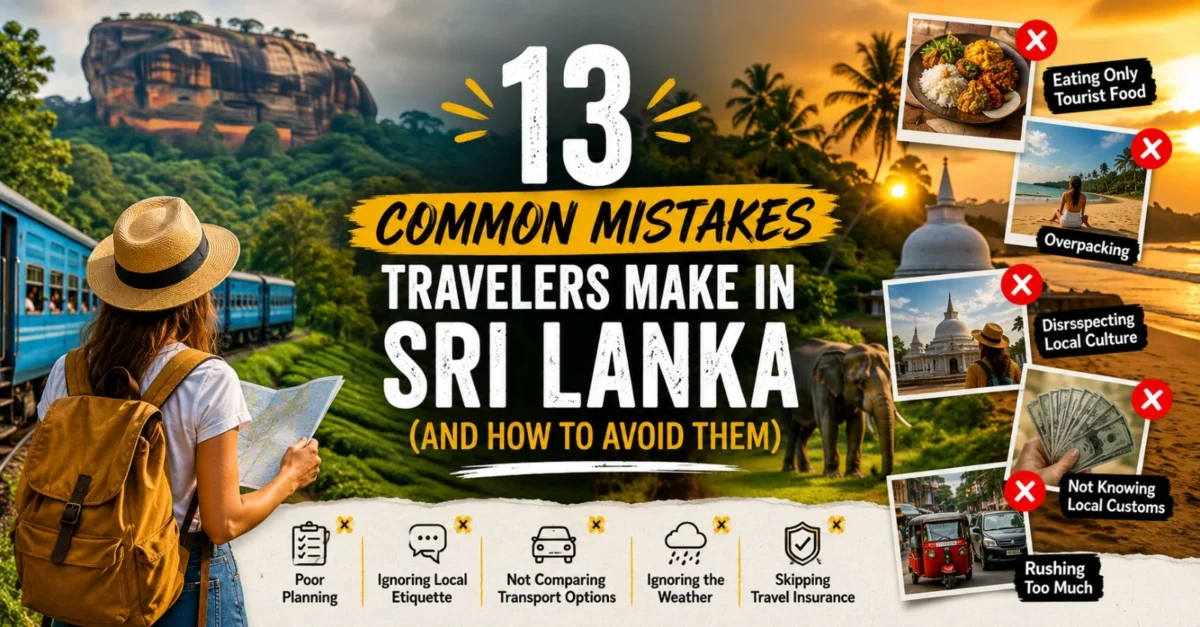
Someone asked on social media recently: “What are the most common issues people face traveling around Sri Lanka? Is it just a lack of clear guidance?”
That question really got me thinking. After helping thousands of travelers navigate Sri Lanka through BlueSky Galle Taxis, I can tell you that most frustrations aren’t because Sri Lanka is difficult or unsafe—it’s genuinely wonderful and welcoming. The problems usually come from not knowing what to expect before you arrive.
Let me share the 13 mistakes we see most often, and more importantly, how you can completely avoid them.
1. Underestimating Travel Times (And Destroying Your Itinerary)
This is the number one issue we encounter. Travelers look at a map, see that Sri Lanka is small and compact, and think: “Perfect! I can easily visit 5 cities in 5 days!”
Then they arrive and discover that a 100km journey takes 4-5 hours instead of the 1-2 hours they expected. Why? Our roads wind through beautiful hills, pass through busy town centers, and require frequent stops at checkpoints. A journey that looks quick on paper becomes a full adventure on the ground.
How to avoid it: Be realistic with your itinerary. Instead of planning 5 cities in 5 days, pick 2-3 bases and explore from there. If timing is critical (like catching a flight), always book a private taxi with a fixed time commitment rather than relying on public buses where delays are common.
Real example: Many travelers book the morning train from Kandy to Ella, then expect to reach the south coast that same evening. It doesn’t work. The train arrives afternoon, then you need hours to reach the south. Now you’re rushing or missing your accommodation. Build realistic travel time into your plans!
2. Overpaying for Local Transport (Because You Don't Know the Rates)
Tuk-tuks and street taxis are part of the authentic Sri Lankan travel experience. Haggling is expected. But here’s what happens: tourists get quoted inflated fares simply because they’re unfamiliar with standard rates. You end up paying 2-3 times the actual price and don’t even realize it.
This becomes frustrating not because of the money necessarily, but because you feel cheated, and it taints your experience.
How to avoid it: Always agree on the fare before getting in the vehicle. Better yet, for any journey longer than 30 minutes, pre-book a reliable private taxi with fixed, transparent pricing. You’ll know exactly what you’re paying, avoid negotiation stress, and usually end up paying less than haggling would cost anyway.
We’ve had clients spend more money haggling with multiple tuk-tuk drivers for short inter-city hops than they would have with a single pre-booked private transfer. Plus, you get professional service, comfortable vehicles, and a driver who speaks English. It’s genuinely better value.
3. Choosing the Wrong Coast for the Season (And Getting Rained On)
Here’s something many travelers don’t realize: Sri Lanka has TWO monsoon seasons affecting different parts of the island.
You book a southern beach holiday for June because you got a great deal on flights, then arrive to discover the southwest coast is in monsoon season—rough seas, afternoon rain, and swimming is dangerous. Meanwhile, the east coast is sunny and perfect, but you booked the south!
Or the opposite: you visit during peak season on the south coast expecting perfect weather, then pay premium prices when you could have gone in June for 50% less and avoided crowds.
How to avoid it: Match your itinerary to the season. Check out our detailed guide on traveling to Sri Lanka during monsoon season to understand how monsoon actually works. The honest truth? You can visit almost any time if you choose the right region. And monsoon season offers incredible benefits—lush landscapes, fewer crowds, and amazing deals—if you plan correctly.
Quick reference:
- May-September: Visit north and east coasts (southwest gets rain)
- October-March: Visit south and west coasts (northeast gets rain)
- Shoulder months (April, November): Manageable weather if you plan activities for mornings
4. Ignoring Cultural and Temple Etiquette (And Accidentally Offending Locals)
Sri Lanka is deeply spiritual. Temples are sacred spaces, not photo ops. Yet we regularly see tourists:
- Wearing shorts and tank tops inside temples
- Taking selfies with Buddha statues (or worse, posing with their back to the statue)
- Putting feet up on seats (deeply disrespectful in Sri Lankan culture)
- Touching sacred objects without permission
These aren’t huge deals that will get you in trouble, but they do offend people who hold these places sacred. And honestly, you don’t want to accidentally disrespect a beautiful cultural site or hurt local people’s feelings.
How to avoid it: It’s genuinely simple:
- Wear long pants or a sarong covering your knees
- Cover your shoulders (sleeveless tops aren’t appropriate)
- Remove shoes and hats before entering temple buildings
- Never photograph people without asking
- Never pose with your back to Buddha statues—it’s considered deeply disrespectful
- Keep a lightweight sarong or scarf in your day bag; you’ll use it constantly
This takes 30 seconds of planning and completely changes how locals interact with you. You’ll get warmer welcomes, better recommendations, and authentic experiences when people see you respect their culture.
5. Fighting "Island Time" (And Getting Frustrated at Everything)
Many travelers arrive in Sri Lanka expecting Swiss-watch efficiency. We run on “island time” here. Things move differently. Services might not be instant. Restaurants might take longer than expected. Your train might leave 15 minutes late (or early!).
Travelers who fight this every step of their journey end up stressed, frustrated, and unable to enjoy what’s actually happening around them.
How to avoid it: Embrace the slow pace! This is genuinely part of the magic. Sri Lanka is best experienced when you relax into the rhythm, build buffer time into your schedule, and remember that the journey itself is part of the experience.
That delay at the restaurant? It gives you time to chat with locals or watch the street life. That slow drive through the hills? You see waterfalls, villages, and landscapes you’d miss if everything moved fast. The “inefficiency” is actually the experience.
Travelers who embrace this tell us repeatedly: “That unplanned delay was actually the best part of my trip. I met amazing people.” Those who fight it spend their whole holiday frustrated.
6. Food and Water Slip-ups (And Spending Days with "Traveler's Tummy")
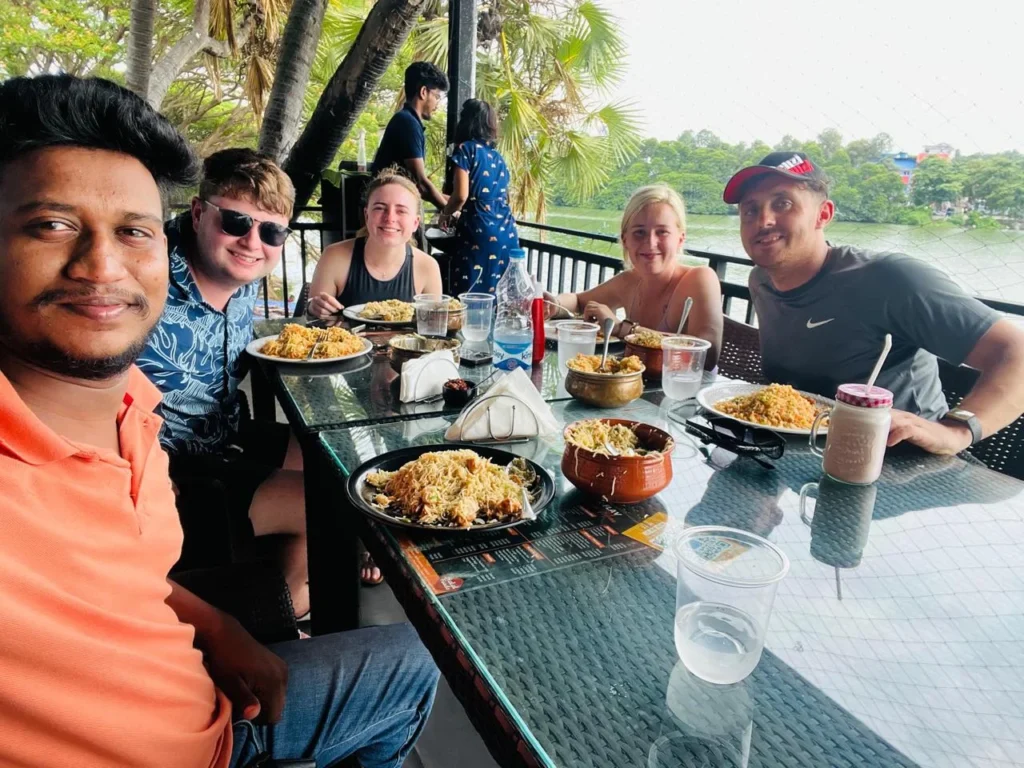
Sri Lankan cuisine is incredible—authentic flavors, incredible spices, friendly locals sharing family recipes. But a sudden diet change combined with different water quality can absolutely wreck your stomach.
We’ve had travelers who eat street food in Bangkok without issue, then get sick from bottled curry in Sri Lanka. Others drink tap water confidently, then spend days in their room dealing with the consequences.
How to avoid it: It’s actually straightforward:
- Water: Stick to sealed bottled water, filtered water from reputable hotels, or boiled water. Don’t risk tap water, even for brushing teeth in some areas
- Food: Eat at busy restaurants with high turnover of food (meaning fresher ingredients). Avoid street food if you have a sensitive stomach, but honestly, busy stalls are usually fine
- Preparation: Eat cooked food rather than raw vegetables if concerned
- Backup plan: Pack basic stomach remedies (Imodium, antacids) just in case
Here’s the thing—you can absolutely enjoy amazing street food and local cuisine safely. Just be a bit mindful about water sources and eat where many locals are eating (that’s a good sign!).
7. Forgetting Tropical Realities (Getting Eaten Alive by Mosquitoes)
Sri Lanka is tropical paradise. Paradise includes mosquitoes, especially in evenings and near wetlands. Some travelers forget this entirely and end up covered in bites, itching miserably throughout their trip.
How to avoid it: Simple fixes:
- Bring quality insect repellent (DEET-based works best)
- Wear light, loose long-sleeved clothing during sunset and evening
- Use mosquito nets if your accommodation provides them (many do)
- Stay in accommodations with good screens on windows
- Avoid being outdoors during peak mosquito hours (dusk onwards)
This isn’t complicated—just pack repellent and you’re sorted. Many travelers forget this one item and it ruins their evenings.
8. Unsafe Wildlife Encounters (Trying to Selfie With Wild Animals)
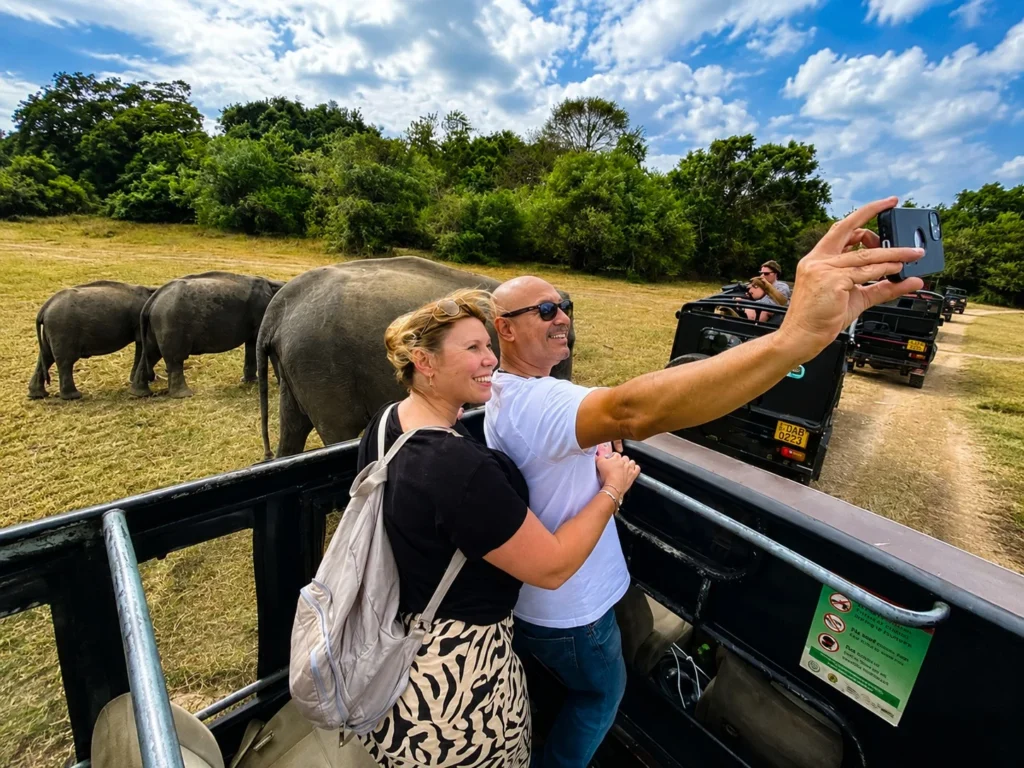
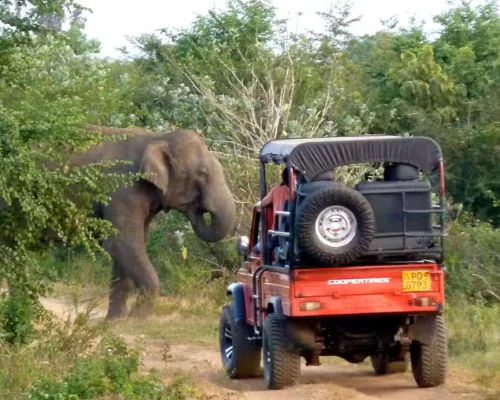
Sri Lanka has incredible wildlife—wild leopards, elephants, bears, crocodiles. This is genuinely amazing! But it’s also genuinely wild.
Some tourists try to approach animals too closely for photos, feed monkeys thinking it’s cute, or ignore safari guide warnings because they want that perfect shot. This endangers you and the animals.
How to avoid it:
- Respect wildlife from a distance—use binoculars and telephoto lenses, not your feet
- Never feed wild animals (monkeys especially—they can bite and carry diseases)
- Always use licensed, experienced safari operators who follow park rules
- Listen to your guide—they understand animal behavior in ways tourists can’t
- Remember: that leopard is a wild apex predator, not a large house cat
Want to learn more? Check our Sri Lankan Safari vs African Safari guide which covers wildlife safety in detail.
9. Flashing Valuables in Busy Areas (And Becoming a Target)
Sri Lanka is genuinely very safe with low crime rates. But like anywhere with tourists and busy markets, petty theft occasionally happens. Travelers sometimes make themselves targets by:
- Wearing expensive jewelry openly
- Flashing large amounts of cash
- Leaving phones and cameras unattended on the beach
- Keeping passports in easily accessible pockets
How to avoid it: Travel smart:
- Keep valuables secure (hotel safe, money belt, inside bag)
- Carry only the cash you need for the day
- Don’t leave expensive items unattended on beaches
- Use common sense in crowded markets
- Keep important documents (passport) in your accommodation safe
This isn’t about being paranoid—it’s just practical sense. The vast majority of travelers have no issues whatsoever. You’re just being smart.
10. Not Checking Road and Weather Conditions (And Getting Stranded)
Tropical rainstorms can occasionally cause sudden flooding, minor landslides in hill country, or temporarily disrupt travel plans. Sometimes a road is fine when you plan a journey, then by the time you travel it’s impassable.
Travelers who don’t check conditions sometimes show up expecting to travel, only to find their route is closed.
How to avoid it: Stay flexible! If you’re traveling during monsoon periods especially, check local weather reports and ask your accommodation about current road conditions.
Better solution: Travel with a local private driver. We monitor weather and road conditions constantly, know alternative routes, maintain radio contact with other drivers for real-time updates, and will keep you safe if conditions change. It’s genuinely the best approach—you just relax while your driver handles logistics.
11. Over-Relying on Credit Cards (Getting Stuck Without Cash)
This one catches tourists constantly. Many assume they can pay for everything with cards like they do at home. Reality: large hotels and modern restaurants accept cards, but:
- Local cafes and street vendors: Cash only
- Tuk-tuks: Cash only (maybe some accept digital apps, but don’t count on it)
- Small souvenir shops: Cash only
- National park entrance fees: Often cash only
- Guesthouses: Many prefer cash
Getting stuck without Sri Lankan Rupees in a remote village is genuinely frustrating.
How to avoid it: Always carry enough local currency (LKR) for daily expenses. We recommend checking out our comprehensive currency guide for traveling to Sri Lanka which covers exactly how much to carry, where to exchange, ATM tips, and best cards for international travel.
Quick rule: Carry 10,000-20,000 LKR daily (roughly $30-60 USD) for local expenses, use cards for hotels and restaurants.
12. Getting Caught Off Guard by Poya Days (No Alcohol, Crowded Buses)
Every full moon in Sri Lanka is “Poya Day”—a public holiday. On these days nationwide:
- Alcohol sales are prohibited (no beer by the beach!)
- Fresh meat sales are prohibited
- Many banks and shops close
- Public transport gets extremely crowded
Travelers who don’t plan for this get surprised when they can’t order a drink, discover banks are closed for currency exchange, or find buses packed beyond belief.
How to avoid it: Check our Sri Lanka Holiday Calendar before traveling so you know what’s coming up. If important to you:
- Exchange currency before Poya days (banks might be closed)
- Stock up on cash
- Plan indoor activities if buses are crowded
- If you want alcohol, purchase the day before Poya
This is genuinely easy to avoid—just know when Poya days occur and plan accordingly.
13. Expecting Taxi Apps to Work Everywhere (And Paying Inflated Rates)
This is a massive mistake travelers make. They assume ride-hailing apps work great everywhere like in their home countries. While apps work fine for quick 10-minute city trips, relying on them for intercity travel is problematic:
Why apps don’t work for intercity travel:
- Finding drivers willing to do long distances from places like Ella or Sigiriya is nearly impossible
- Even if you find one, rates are often higher than booking directly because apps calculate massive return-trip fees
- Standard app vehicles lack space and comfort for long journeys with luggage
- You’re not getting the service quality of professional tourist taxi companies
How to avoid it: For intercity travel, always pre-book a dedicated tourist transport company. Tourist taxis offer:
- Lower fixed rates (often cheaper than apps)
- Larger, comfortable vehicles
- Experienced drivers who know best routes
- English-speaking professionals
- Reliability and accountability
For a complete breakdown, check our guide on private drivers vs point-to-point taxis in Sri Lanka—it includes exact cost comparisons showing how much cheaper professional booking can be.
The Secret to a Stress-Free Sri Lankan Holiday
Here’s what I’ve learned after helping thousands of travelers: Sri Lanka isn’t difficult to navigate, but it absolutely rewards travelers who plan ahead and use local expertise.
Most frustrations don’t come from the country being bad—they come from trying to travel too fast, handling transport logistics alone without proper planning, or using the wrong transport methods.
You don’t need to be paranoid or overly cautious. Sri Lanka is genuinely safe and welcoming. You just need to approach it with realistic expectations, proper planning, and local guidance.
Why BlueSky Galle Taxis for Your Sri Lankan Adventure?
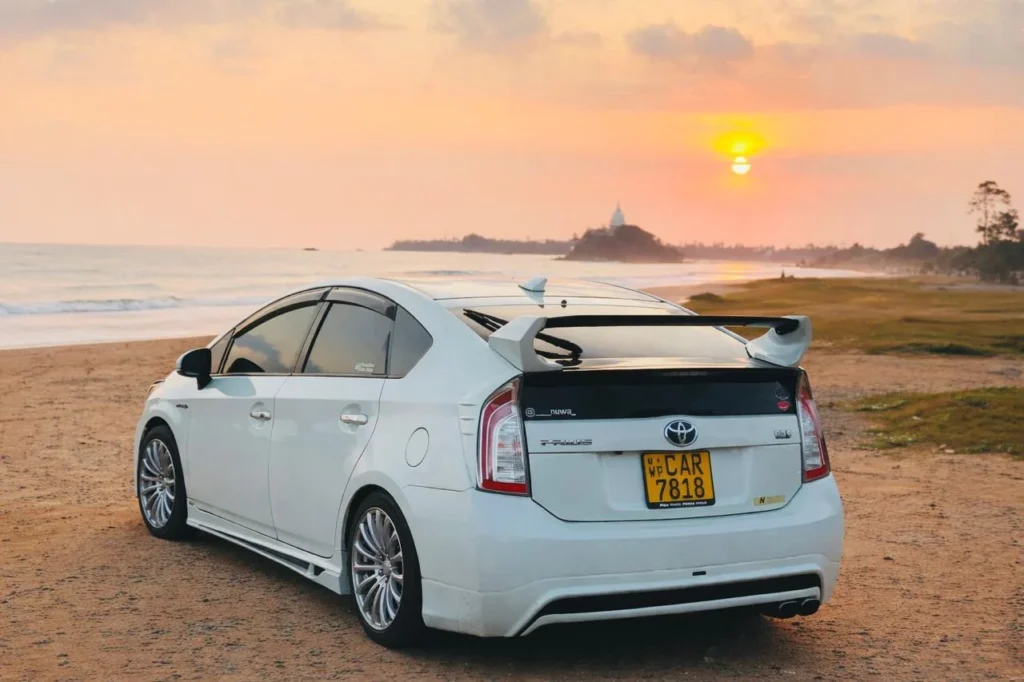
This is where we come in. At BlueSky Galle Taxis, we eliminate the stress by handling the logistics you’d otherwise worry about:
✓ Fixed-rate transportation so you never overpay or deal with haggling ✓ Professional English-speaking drivers who know the best routes and timing ✓ Real-time updates on road and weather conditions ✓ Flexible scheduling that works around Poya days and seasonal variations ✓ Comprehensive tour coordination combining safari, temples, beaches, and cultural sites seamlessly ✓ Honest advice about realistic timings, what to expect, and how to make the most of your trip
We’ve been helping international travelers navigate Sri Lanka successfully for years. We know exactly which mistakes are most common and exactly how to help you avoid them.
Whether you’re planning a week-long safari and beach combination, exploring the cultural triangle, or doing a complete island tour, we design itineraries that actually work rather than setting you up for disappointment.
Ready to experience Sri Lanka without the stress?
Head over to our main booking page at BlueSky Galle Taxis to lock in your point-to-point rides. Let’s set up a journey that works perfectly for your goals, schedule, and budget. Whether you need a quick airport transfer or a ride to your next hotel, we’ll handle the logistics—you just enjoy the magic!
FAQs
Ready to experience Sri Lanka without the stress? Contact BlueSky Galle Taxis and let’s design an itinerary that works perfectly for your goals, schedule, and budget. We’ll handle the logistics—you just enjoy the magic!