“Is Sri Lanka’s safari experience as good as Africa?”
“Should I skip Africa and just do safari in Sri Lanka?”
“Which safari gives better wildlife sightings?”
These are questions we hear constantly from travelers planning their trips. As someone who’s helped thousands of visitors explore Sri Lanka’s national parks through BlueSky Galle Taxis, let me give you the honest, straightforward comparison.
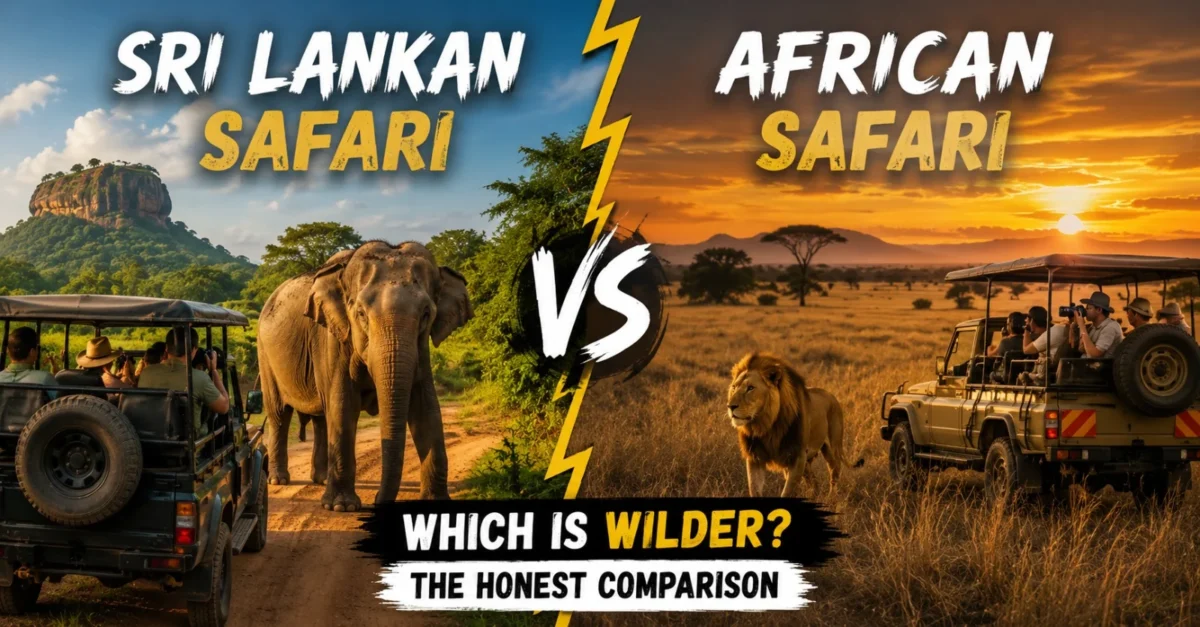
The short answer: Both are incredible, but they’re completely different experiences. Sri Lanka isn’t trying to be Africa—it’s something unique and special in its own right.
Let me break down exactly what each offers so you can decide which safari suits your trip better.
What Animals Can You Actually See?
Sri Lanka's Wildlife Stars
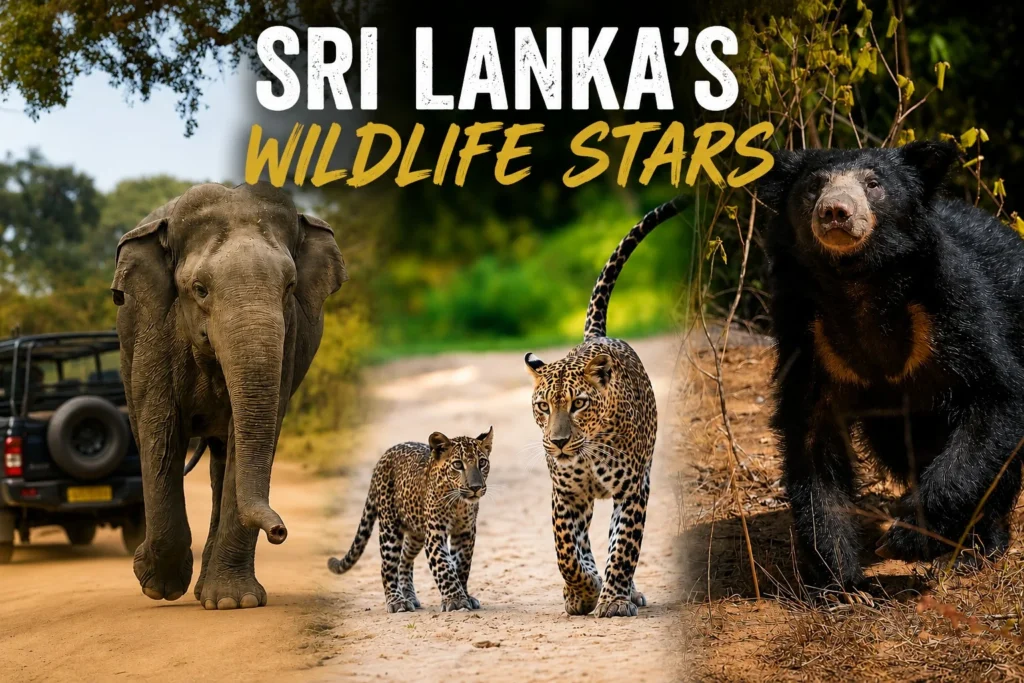
The Big Attractions:
- Sri Lankan Leopards: One of the world’s best places to spot these elusive cats
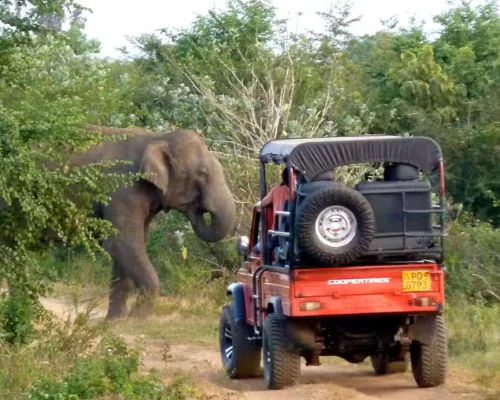
- Asian Elephants: Hundreds in single locations, often in large herds
- Sloth Bears: Unique to South Asia, surprisingly common
- Crocodiles: Massive muggers and saltwater crocs
- Spotted Deer, Sambar Deer, Wild Boar
- Water Buffalo and Wild Buffalo
- Monkeys: Langurs, macaques, and more
- Over 400 bird species including peacocks, eagles, and endemic species
Unique subspecies: Sri Lanka has its own leopard and elephant subspecies found nowhere else on Earth. The Sri Lankan leopard is actually larger than many African leopards because it’s the apex predator here—no lions or tigers competing for territory.
What you won’t see: Lions, rhinos, giraffes, zebras, wildebeest, cheetahs, hyenas, hippos (well, not wild ones anyway!)
Africa's Wildlife Lineup
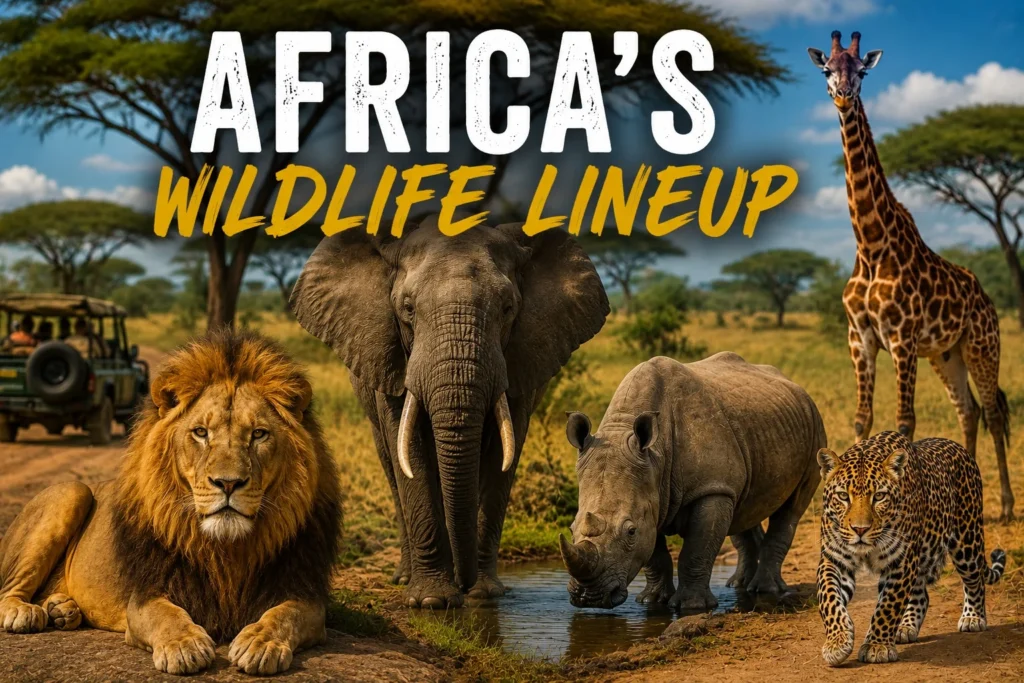
The Famous Big Five:
- Lions
- Leopards (but much harder to spot than in Sri Lanka!)
- African Elephants
- Rhinos (black and white)
- Buffalo
Plus so much more:
- Cheetahs, wild dogs, hyenas
- Giraffes, zebras, wildebeest
- Hippos, countless antelope species
- Gorillas and chimps (certain countries)
- Hundreds of bird species
The sheer variety is staggering. Africa’s got bigger predators, more hoofed animals, and that classic safari scene you’ve seen in documentaries—vast herds stretching across endless plains.
The Honest Comparison
Winner for variety: Africa, hands down. The sheer number of different large mammals is unmatched.
Winner for leopard sightings: Sri Lanka, surprisingly! Yala National Park has one of the world’s highest leopard densities, and your chances of actually seeing one are much better than most African parks.
Winner for elephants: It’s close, but both are spectacular. Africa has larger elephants, Sri Lanka has incredible herds you can observe closely.
Winner for unique species: Tie. Both have animals you can’t see anywhere else.
Sri Lanka's Best Safari Parks
Yala National Park
Famous for: Leopards—the world’s highest density per square kilometer
What you’ll see: Leopards (real possibility!), elephants, sloth bears, crocodiles, deer, buffalo, countless birds
Best time: February to July for leopards; drier months generally better
Why visit: If seeing a leopard in the wild is on your bucket list, this is one of your best chances anywhere on the planet. We’ve had clients spot 2-3 leopards in a single safari!
The catch: Very popular, so it can get crowded with safari jeeps. Early morning departures beat the crowds.
Udawalawe National Park
Famous for: Elephants, elephants, elephants
What you’ll see: Elephant herds (virtually guaranteed), deer, crocodiles, water buffalo, birds
Best time: Year-round—this park is consistently good
Why visit: If you want guaranteed elephant sightings, this is your park. We’re talking herds of 50+ elephants, including adorable babies. The open grassland landscape also makes viewing easy.
Bonus: Visit the Elephant Transit Home nearby where orphaned baby elephants are cared for before release.
Wilpattu National Park
Famous for: Peaceful forest safari with fewer crowds
What you’ll see: Leopards (harder than Yala but possible), elephants, sloth bears, deer, unique “willus” (natural lakes)
Best time: February to October (drier weather)
Why visit: For a more intimate safari experience without the jeep traffic of Yala. The forest setting and natural lakes create beautiful scenery.
Minneriya & Kaudulla National Parks
Famous for: “The Gathering”—hundreds of elephants congregating together
What you’ll see: Massive elephant herds (seasonal), deer, crocodiles, birds
Best time: July to October when the “Gathering” happens—up to 300 elephants in one place!
Why visit: Witnessing hundreds of elephants together is mind-blowing. This seasonal phenomenon rivals anything Africa offers.
Bundala National Park
Famous for: Birdwatching and wetland wildlife
What you’ll see: Migratory water birds (flamingos!), crocodiles, elephants occasionally, deer
Best time: October to March for migratory birds
Why visit: If you’re a bird enthusiast, this UNESCO Biosphere Reserve offers incredible variety, including greater flamingos during migration season.
What Makes Sri Lankan Safari Different from African Safari
Size and Scale
Africa: Vast, endless landscapes. Parks like Serengeti or Kruger are bigger than some countries. You can drive for hours seeing wildlife across huge open plains. The sense of wilderness is overwhelming.
Sri Lanka: More compact parks with dense forest and scrubland. You’re not dealing with enormous distances. Parks feel more intimate and accessible.
What this means for you:
- African safaris often require multiple days at each park
- Sri Lankan parks can be visited as day trips from nearby towns
- Africa needs more time commitment; Sri Lanka fits easily into multi-destination tours
Ease of Access
Sri Lanka:
- Yala is 5-6 hours from Colombo, easily combined with southern beaches
- Udawalawe is on the route between highlands and coast
- Most parks are 3-6 hours from major tourist areas
- You can literally do safari in the morning, beach in the afternoon
Africa:
- Often requires internal flights between parks
- Long distances between safari areas and other attractions
- Usually dedicated safari trips rather than mixed itineraries
- More complex logistics
Real example: With BlueSky Galle Taxis, we regularly design tours where travelers do Yala safari one day, then they’re on the beach in Mirissa the next day. Try doing safari in Tanzania’s Serengeti then beach in Zanzibar—that’s flights, transfers, and much more planning.
Experience Style
African Safari:
- Often multi-day stays at luxury lodges inside or near parks
- Game drives typically twice daily (early morning, late afternoon)
- More time to explore different areas of massive parks
- Often all-inclusive packages
- Can feel like a dedicated “safari holiday”
Sri Lankan Safari:
- Typically half-day or full-day excursions
- You stay in nearby towns, entering parks for safari
- More casual, less “luxury lodge” focused (though nice accommodations exist)
- Easier to combine with other travel experiences
- Feels like part of a broader Sri Lankan adventure
Neither is better—they’re just different approaches.
The "Wildness" Factor
Let’s be honest: Africa feels wilder. The sheer scale, the predator-prey dynamics with lions hunting zebras, the massive migrations, the sense of untouched wilderness—Africa delivers that “out in the wild” feeling intensely.
But Sri Lanka is genuinely wild too. These aren’t zoo animals or tame creatures. That leopard stalking through Yala is a wild apex predator. Those elephant herds are completely wild. The sloth bear ambling across the road could be dangerous if provoked.
The difference is scale and setting, not actual wildness. Sri Lankan national parks are real wilderness areas where animals live completely natural lives—just in a more compact geography.
Cost Comparison: The Real Numbers
Sri Lankan Safari Costs
Park entrance fees:
- Around $25-35 per person (varies by park and nationality)
- Vehicle fees: $40-50
- Tracker/guide fee: Included or small additional fee
Safari jeep rental:
- Half-day safari (3-4 hours): $60-80 total per jeep (seats 6)
- Full-day safari: $80-120 per jeep
Total for typical Yala safari:
- Solo traveler: $120-180 for full experience
- Couple: $70-100 per person
- Group of 4-6: $40-60 per person
Additional costs:
- Accommodation near parks: $30-150 per night depending on comfort level
- Transport to/from park: Varies (BlueSky Galle Taxis includes this in tour packages)
African Safari Costs
This varies enormously by country and style, but typical costs:
Budget camping safari (Tanzania/Kenya):
- $150-300 per person per day
- Includes accommodation, meals, game drives
- Still significantly more than Sri Lanka
Mid-range lodge safari:
- $300-600 per person per day
- Comfortable lodges, good food, experienced guides
Luxury safari (South Africa, Botswana, Tanzania):
- $500-2,000+ per person per day
- All-inclusive luxury lodges, premium experiences, exclusivity
Park fees alone in Tanzania:
- Around $70-80 per person per day just for entrance
- Plus vehicle, guide, accommodation costs on top
Realistic African safari budget:
- 3-4 day safari: $1,000-2,500 per person minimum
- Week-long safari: $2,500-5,000+ per person
The Bottom Line
Sri Lankan safari is significantly more budget-friendly. You can have an incredible wildlife experience for a fraction of African safari costs. For travelers watching their budget or wanting to add safari to a broader tour without breaking the bank, Sri Lanka delivers exceptional value.
African safari is a bigger investment but offers that iconic experience with more variety and often more luxury. If safari is your main goal and budget isn’t a constraint, Africa’s scale and diversity justify the cost.
How Long Does Safari Take?
Sri Lankan Safari Timing
Half-day safari:
- Morning: 5:30am-9:30am or 6am-10am
- Afternoon: 2pm-6pm or 3pm-7pm (depending on park and season)
- Duration: 3-4 hours inside the park
- Best for: Adding safari to a busy itinerary, budget-conscious travelers
Full-day safari:
- 5:30am-4pm or 6am-5pm
- Includes break inside park for lunch
- Duration: 8-10 hours total
- Best for: Serious wildlife enthusiasts, maximizing sighting chances
Most popular choice: Morning half-day safari. Animals are most active early, it fits easily into travel schedules, and it’s more affordable.
Our recommendation: If you’ve never done safari, do at least one full-day or two half-days at different times. Morning and afternoon offer different animal behaviors and sightings.
African Safari Timing
Typical schedule:
- Early morning drive: 6am-9am
- Breakfast at lodge
- Free time (rest, pool, read)
- Late afternoon drive: 3pm-6:30pm
- Evening at lodge (dinner, campfire, stargazing)
Multi-day commitment: African safaris typically require minimum 3-4 days at each park to justify the cost and logistics. Many travelers do 5-7 day safaris or longer.
Key difference: African safari is usually the main focus of your trip. Sri Lankan safari is often one component of a diverse itinerary.
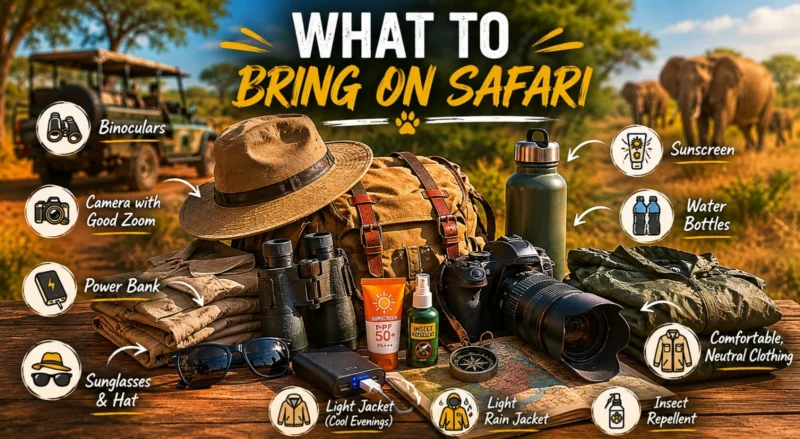
What to Bring on Safari
Essential Items
✓ Binoculars: Game-changer for wildlife viewing (you can often rent at parks) ✓ Camera with good zoom: Bring extra batteries and memory cards ✓ Power bank: For charging phones and cameras ✓ Sunglasses and hat: Sun is intense in open safari jeeps ✓ Sunscreen: High SPF, you’ll be exposed for hours ✓ Water bottle: Stay hydrated (though guides usually provide water) ✓ Comfortable, neutral-colored clothing: Khakis, greens, browns work well ✓ Light jacket or hoodie: Surprisingly cool in early mornings ✓ Insect repellent: Especially for evening safaris ✓ Light rain jacket: Unexpected showers can happen
What to Wear
Colors matter: Neutral tones (khaki, olive, brown, tan) help you blend in. Avoid bright colors, especially red and white.
Layers: Mornings start cool (15-20°C), then warm up quickly (30-35°C by midday). Dress in layers you can remove.
Closed shoes: Sneakers or light hiking shoes. Sandals work but closed shoes are better for bush walking at some parks.
Long sleeves option: Protection from sun and insects, even if it’s hot.
Safety and Comfort Tips
During Safari
✓ Follow your guide/driver’s instructions absolutely —they know animal behavior ✓ Stay seated in the vehicle unless specifically told standing is okay ✓ Keep voices low: Loud noises disturb animals and reduce sighting chances ✓ Never feed wildlife: It’s dangerous and illegal ✓ Keep arms inside vehicle: That curious monkey or elephant is still wild ✓ Don’t stand up suddenly: Animals can perceive this as a threat ✓ Respect boundaries: If a guide says we’re too close, trust them
Best Practices for Sightings
✓ Start early: 5:30-6am departures see more animals than 7-8am starts ✓ Be patient: Sometimes you wait quietly for animals to appear ✓ Listen to experienced trackers: They spot animals you’d never see ✓ Don’t chase sightings: If every jeep is racing somewhere, it often means the animal has already moved on ✓ Enjoy the whole experience: Don’t fixate only on leopards or elephants—appreciate everything
Choosing Your Safari Operator
In Sri Lanka:
- Use licensed operators with experienced trackers
- Check vehicle condition: Well-maintained jeeps are essential
- Verify guide credentials: Experienced guides spot animals you’d miss
- Read recent reviews: Other travelers’ experiences tell you what to expect
- Book through reputable services: BlueSky Galle Taxis arranges safaris with trusted partners who meet quality standards
Who Should Choose Sri Lankan Safari?
Sri Lankan safari is perfect for:
✓ First-time safari goers who want to experience wildlife without the complexity or cost of Africa
✓ Families with children —shorter safari durations, easier logistics, lower costs, and combining with beaches keeps kids happy
✓ Budget-conscious travelers wanting authentic wildlife experiences without breaking the bank
✓ People with limited time who want to add safari to a broader travel itinerary (cultural sites, beaches, tea country, etc.)
✓ Beach + safari combinations —you can literally do both in one week!
✓ Nature lovers wanting close animal encounters —Sri Lankan parks offer intimate experiences with incredible species
✓ Leopard enthusiasts —seriously, Yala offers world-class leopard spotting
✓ Travelers who prefer less commercialized experiences —many Sri Lankan parks feel less “touristy” than famous African parks
✓ Anyone wanting excellent value for money —outstanding wildlife viewing at a fraction of African safari costs
Who Should Choose African Safari?
African safari is better for:
✓ Travelers specifically wanting the Big Five —lions, leopards, elephants, rhinos, buffalo in one place
✓ People who want vast open wilderness —that endless Serengeti plain experience
✓ Luxury safari enthusiasts —Africa offers high-end lodges and all-inclusive experiences Sri Lanka can’t match
✓ Travelers wanting to see the Great Migration —one of Earth’s most spectacular wildlife events
✓ People planning a dedicated wildlife holiday —when safari is the entire purpose of your trip
✓ Photographers wanting iconic African scenes —those classic wildlife shots with acacia trees and golden light
✓ Travelers with bigger budgets who want the ultimate safari experience
✓ Anyone dreaming specifically of Africa —sometimes it’s just about fulfilling that particular dream!
Quick Comparison Table
Combining Safari with Your Sri Lankan Adventure
Here’s where Sri Lanka really shines: you can easily blend safari with completely different experiences in one trip.
Sample Combined Itineraries
Week-Long Safari + Beach + Culture:
- Days 1-2: Colombo arrival, cultural sites
- Days 3-4: Yala National Park safari
- Days 5-6: Galle Fort and southern beaches
- Day 7: Departure
Two-Week Complete Experience:
- Days 1-2: Colombo
- Days 3-4: Cultural Triangle (Sigiriya, Polonnaruwa)
- Days 5-6: Kandy and tea country
- Days 7-8: Udawalawe or Yala safari
- Days 9-12: Southern beaches (Mirissa, Unawatuna)
- Days 13-14: Return via Galle Fort
This kind of diversity in one trip would be nearly impossible in Africa without serious time and budget. Try combining Serengeti safari with Zanzibar beaches and cultural sites like Stone Town—you’re looking at multiple flights, visas, and at least 2-3 weeks minimum.
With BlueSky Galle Taxis, we design these combined itineraries regularly. Your safari days slot naturally into broader tours, with comfortable road transfers connecting everything. No flights needed between activities—we drive you through beautiful countryside from beaches to safaris to cultural sites seamlessly.
Real Talk: Setting Expectations
Let me be completely honest based on years of feedback from travelers who’ve done both:
If you go to Sri Lanka expecting an African safari experience, you might be disappointed. It’s not Africa. The scale is different, the variety is less, and you won’t see lions or giraffes.
But if you approach Sri Lankan safari as its own unique experience, you’ll likely be blown away. The leopard sightings, the elephant herds, the lush jungle settings, the accessibility, the value—it’s genuinely special.
Many travelers tell us: “We’ve done African safaris before, and while Africa is unbeatable for scale, we actually saw more leopards in Sri Lanka than all our African trips combined!”
Others say: “Sri Lankan safari was perfect for us—we got incredible wildlife experiences without the complexity and cost of Africa, plus we got beaches and culture in the same trip.”
And first-timers often tell us: “We didn’t know what to expect, but that was absolutely wild! Seeing a leopard just 20 meters from our jeep was one of the most thrilling moments of our lives.”
BlueSky Galle Taxis Safari Services
As an islandwide taxi and tour operator, we arrange safari experiences throughout Sri Lanka as part of broader tour packages:
What we offer:
✓ Transport to and from national parks from anywhere in Sri Lanka ✓ Coordination with licensed safari operators we trust ✓ Flexible itineraries combining safari with other destinations ✓ Custom tours based on your interests (leopards? elephants? specific parks?) ✓ Honest advice about which parks suit your goals and timing ✓ Seamless logistics —you don’t worry about anything except enjoying wildlife
Popular safari packages:
- Yala Safari from Galle/southern coast (overnight trip)
- Udawalawe day trip from central or southern areas
- Multi-park tours visiting Yala + Udawalawe or other combinations
- Complete wildlife circuits combined with beaches, culture, and more
Why book through us:
- We’re based locally and know the parks intimately
- Our drivers have relationships with the best safari trackers
- We handle all logistics so your safari day runs smoothly
- We’re honest about realistic expectations based on seasons and conditions
- Our pricing is transparent with no hidden fees
Contact BlueSky Galle Taxis to discuss adding safari to your Sri Lankan adventure. We’ll design an itinerary that fits your schedule, budget, and wildlife dreams!
Final Verdict: Which is Wilder?
For sheer vastness and variety: Africa wins, no contest.
For value, accessibility, and fitting safari into a diverse trip: Sri Lanka wins.
For leopard sightings: Sri Lanka surprisingly wins.
For that iconic safari dream with lions and endless plains: Africa wins.
For combining wildlife with beaches and culture easily: Sri Lanka wins.
The truth is, they’re not really competing. They’re offering different experiences, and both are worth doing if you have the opportunity.
If you can only do one safari in your lifetime and it’s always been about Africa—go to Africa. Fulfill that dream.
But if you want exceptional wildlife experiences at reasonable cost, combined with incredible beaches, ancient temples, lush tea plantations, and friendly culture all in one manageable trip—Sri Lanka delivers something Africa simply can’t match: diversity and accessibility in a compact, affordable package.
And honestly? Many travelers end up doing both eventually. Sri Lankan safari whets the appetite for wildlife experiences, then later they tackle Africa. Or they do Africa first, then discover Sri Lanka offers its own magic they never expected.
The best safari is the one you actually take. And for most travelers, Sri Lankan safari offers the perfect entry point into wildlife travel—wild enough to thrill, accessible enough to actually do, and valuable enough to not break the bank.
Ready to experience Sri Lanka’s wild side? Contact BlueSky Galle Taxis and let’s plan your safari adventure!