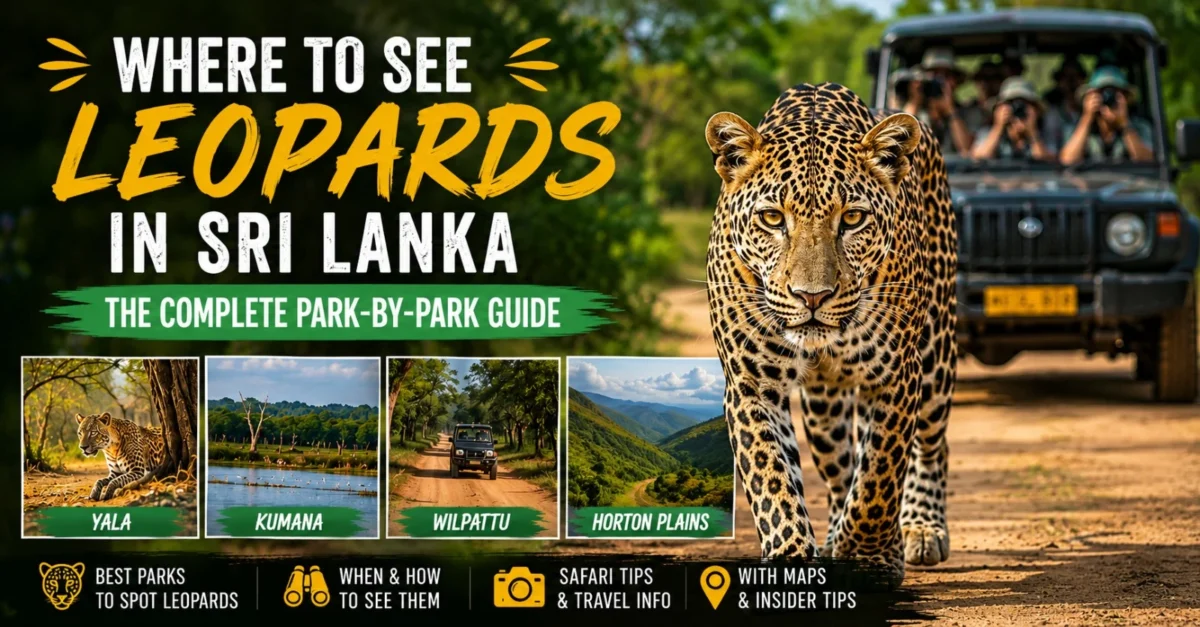
Sri Lanka — One of the World's Best Places to See Wild Leopards
If seeing a wild leopard is on your bucket list, you might be surprised to learn that you don’t need to book a flight to Kenya or Tanzania to make it happen. Sri Lanka — this small, teardrop-shaped island hanging off the southern tip of India — is genuinely one of the best places on the entire planet to see wild leopards in their natural habitat, and it’s been quietly stealing the thunder from Africa’s famous reserves for years now among serious wildlife enthusiasts. The reason comes down to a fascinating ecological quirk: unlike in Africa, Sri Lankan leopards have no lions, tigers, or competing apex predators to worry about. This ecological advantage changes their behaviour dramatically — leopards hunt during daylight hours more frequently, rest openly on rocks, and cross jeep tracks without hesitation, which increases visibility during safari drives considerably.
Leopards in Sri Lanka are found across a remarkable range of habitats, from hot, dry coastal scrubland at sea level all the way up to misty cloud forests sitting at over 2,000 metres above sea level in the central highlands. It is estimated that between 750 and 1,000 leopards roam the island in the wild, with the majority concentrated within the boundaries of protected national parks. The Sri Lankan leopard, known scientifically as Panthera pardus kotiya, is an endemic subspecies found only on this island, as confirmed through genetic research published in Conservation Biology — meaning that every leopard you see here exists nowhere else on earth. That fact alone makes a Sri Lankan leopard safari something genuinely extraordinary.
Yala National Park — The Undisputed Leopard Capital
Ask any wildlife photographer, safari guide, or seasoned wildlife traveller where to go for the best leopard sightings in Sri Lanka, and the answer will almost always be the same: Yala National Park. Located in the southeast of the island, Yala has earned its global reputation as the premier leopard-watching destination through sheer, staggering numbers. With a leopard density of approximately 54 leopards per 100 km², studies published by the Department of Wildlife Conservation cite some of the highest leopard densities anywhere in the world in Yala’s Block 1, with figures often reaching 0.5 to 1 leopard per square kilometre in prime areas. To put that in perspective, many of Africa’s most celebrated leopard destinations can only dream of densities like this.
Block 1 is where your best chance of encountering leopards lies — you’ll find them draped across tree branches, stealthily moving through dry woodland, or crossing open ground in the early morning light. The park’s varied terrain of dense forest, open grassland, coastal lagoons, and rocky outcrops gives leopards everything they need to thrive, and gives safari visitors a spectacular range of backdrops for wildlife encounters. Beyond leopards, Yala delivers elephants, sloth bears, mugger crocodiles, and over 200 bird species in a single visit. It is Sri Lanka’s most visited national park for very good reason, and if a leopard sighting is your primary goal, this is where your odds are highest.
Meet Lucas — Yala's Most Famous Leopard
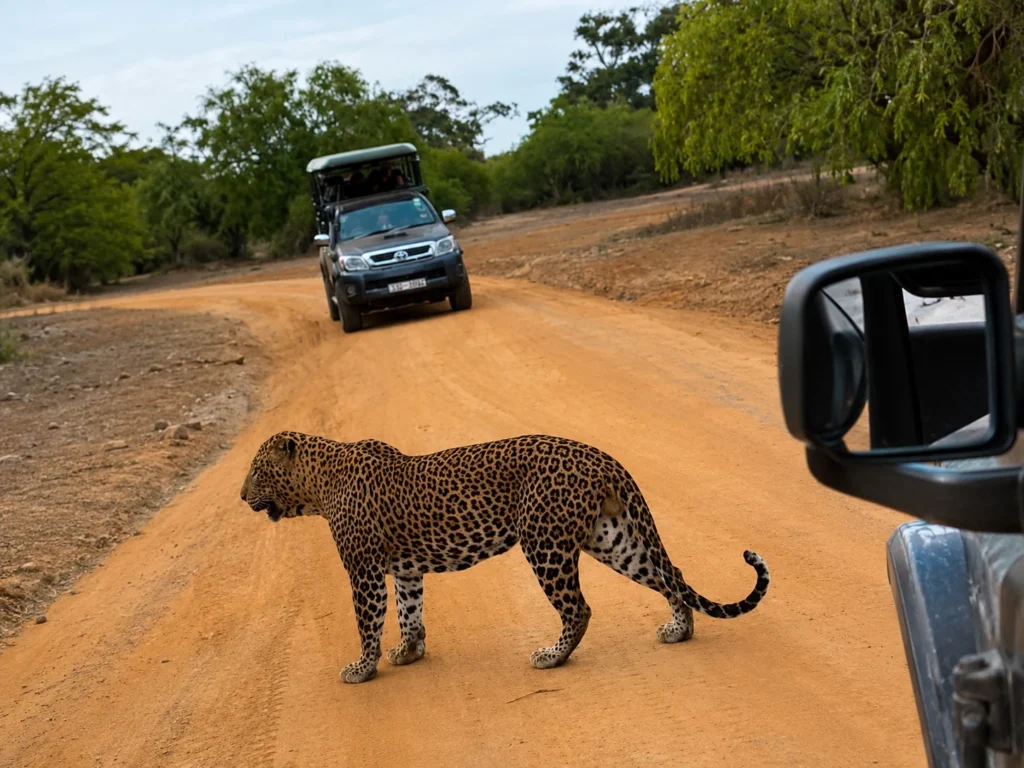
Every great wildlife destination has its celebrity animals, and Yala’s is undoubtedly Lucas — a large, powerful alpha-male leopard who has become something of a legend among the park’s regular visitors and guides. Lucas is frequently spotted in the southern sections of Block 1, often lounging in the open with the casual confidence of an animal that knows he sits at the very top of the food chain. Photographs of Lucas have appeared in wildlife magazines, photography competition entries, and countless travel blogs. If you visit Yala and your guide mentions that Lucas has been spotted nearby, hold on tight — that encounter is one you will be telling people about for the rest of your life.
Best Tips for Leopard Spotting in Yala
Early morning and late afternoon game drives yield the most sightings, when leopards are most active. Always book your safari with an experienced, licensed guide who knows Block 1’s terrain intimately — the difference between a guide who simply drives the main tracks and one who reads animal behaviour, tracks paw prints, and communicates with other jeeps is enormous. Peak tourist season from December to March brings higher visitor numbers to the park, but with five different zones to explore, it is possible to find quieter corners even during busy periods. Visiting during the dry season between February and June concentrates animals around waterholes and dramatically improves your chances of multiple sightings in a single drive.
Kumana National Park — The Quieter Alternative with Serious Credentials
Situated immediately north of Yala along the southeast coast, Kumana National Park has spent years living in its famous neighbour’s shadow — but that is rapidly changing. A recent wildlife study revealed that Kumana holds the second highest leopard density in Sri Lanka at 41 leopards per 100 km², making it a genuinely world-class leopard destination in its own right. Kumana is a smaller but far more tranquil option for those seeking to spot leopards without the jeep traffic that Yala’s Block 1 can attract during peak season, and for many wildlife enthusiasts, that quieter, more intimate atmosphere actually produces a more memorable experience than the busier alternative next door.
The park’s landscape blends coastal wetlands, dense jungle, and open scrubland in a way that feels wilder and less managed than Yala’s well-worn safari routes. Beyond leopards, Kumana offers exceptional wildlife encounters including elephant herds and a remarkable diversity of bird species that make it a genuine paradise for nature lovers of every kind. If you’ve already done Yala on a previous trip and want somewhere fresher, or if you simply prefer fewer jeeps and more wilderness around you, Kumana deserves to be at the very top of your list.
Meet Ritta — Kumana's Rising Star
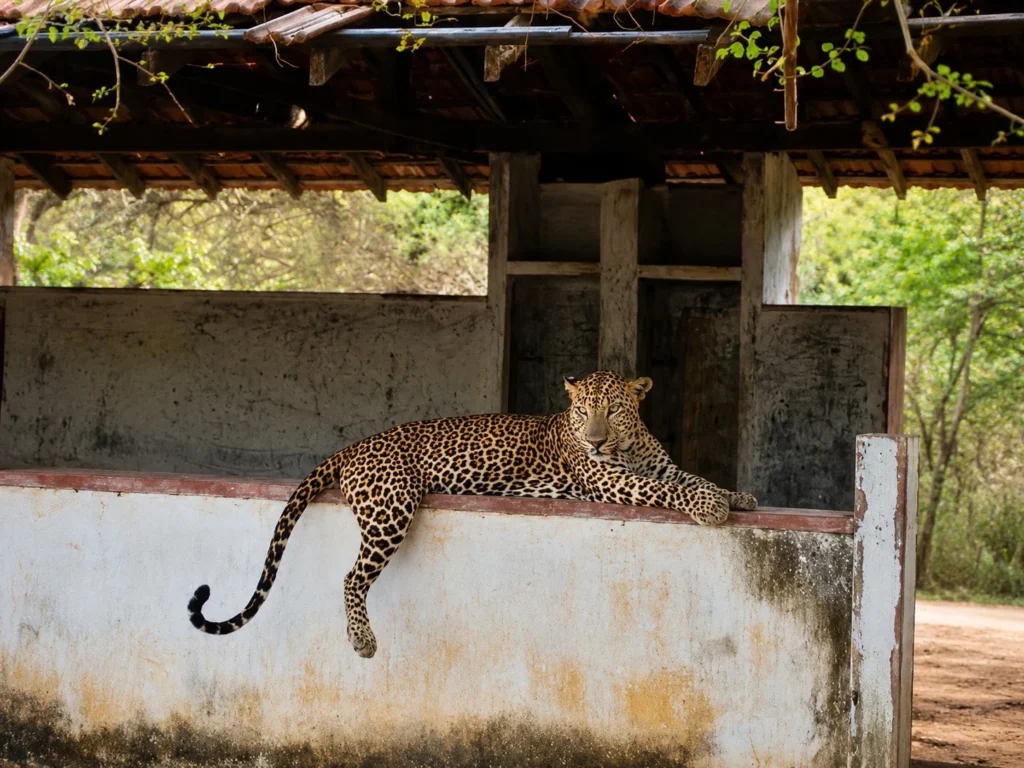
Kumana has its own celebrity leopard in the form of Ritta, a young male who has grown significantly in fame among local guides and wildlife photographers in recent years. Unlike the battle-scarred veterans of Yala’s Block 1, Ritta has a particularly distinctive and endearing habit — he is frequently spotted lounging inside an abandoned school building within the park, using the crumbling structure as his personal resting spot. It makes for some of the most unusual and memorable leopard photographs taken anywhere in Sri Lanka. Ritta’s rising profile has become a compelling reason in itself to choose Kumana for your next wildlife adventure.
Wilpattu National Park — Sri Lanka's Largest Park and a Leopard Lover's Dream
Head to the northwest corner of Sri Lanka and you’ll find Wilpattu National Park — the island’s largest protected area, covering over 1,300 square kilometres of ancient, undisturbed wilderness. Wilpattu’s name means “Land of Lakes,” derived from its numerous natural wetlands that dot the landscape and create a pristine, ancient wilderness where leopards roam alongside historic reservoirs. With a leopard density of 18 leopards per 100 km², Wilpattu’s numbers are lower than Yala or Kumana, but the experience of spotting a leopard here is arguably more rewarding precisely because you have to work a little harder for it. Many experienced wildlife travellers who have visited both Yala and Wilpattu find it impossible to choose between them — both are incredible, and if your itinerary allows, visiting both dramatically increases your chances of a sighting.
Wilpattu’s dense vegetation makes leopard spotting more challenging than at Yala, but this translates to more authentic wildlife encounters, with fewer jeeps disturbing the animals’ natural behaviour. The park has a particular magic in the early morning, when mist rises off the ancient lakes, peacocks call from the tree line, and the whole landscape feels like it has remained unchanged for centuries. Alongside leopards, you’ll encounter elephants, sloth bears, crocodiles, deer, and an extraordinary diversity of birdlife that makes Wilpattu a serious destination for ornithologists as well as big cat enthusiasts.
Meet Neluma — Wilpattu's Beloved Elder
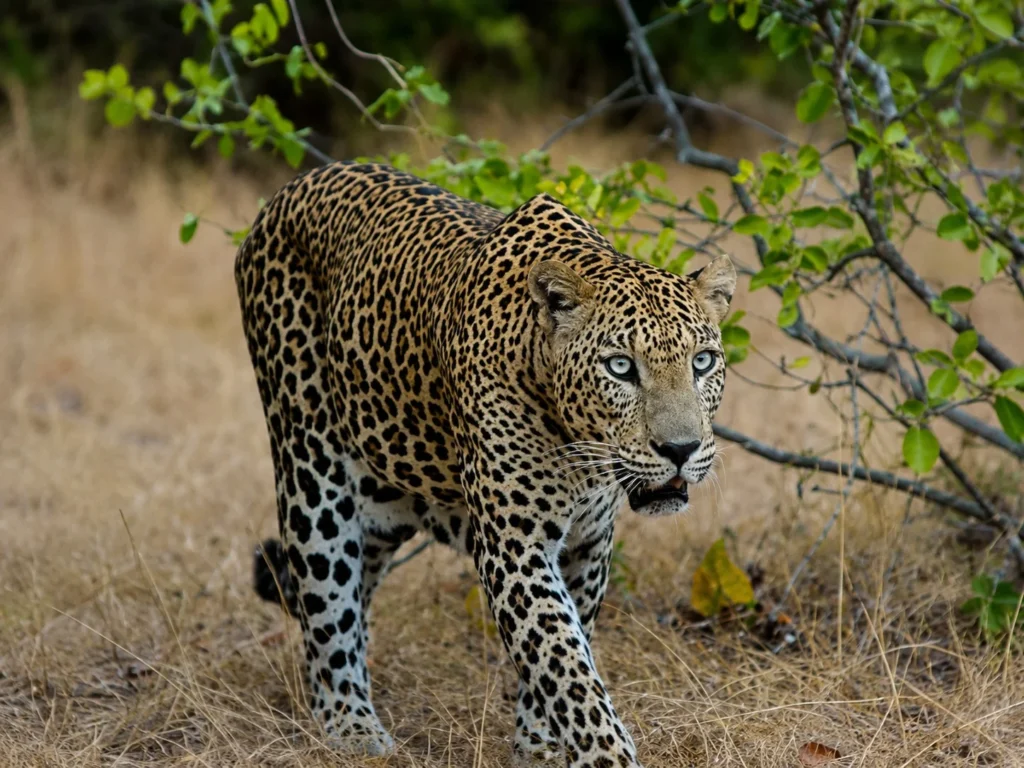
Wilpattu’s most famous resident is Neluma, a leopard who has become beloved among the park’s regular visitors and guides in much the same way that Lucas defines Yala. Neluma is a mature, well-known male whose territory covers a significant stretch of the park’s central zone, and sightings of him have generated some of Sri Lanka’s most celebrated wildlife photography. Sadly, recent reports suggest Neluma is now showing visible signs of old age, lending his sightings a certain bittersweet poignancy for those lucky enough to encounter him. Every glimpse of Neluma feels like a privilege — a reminder of the fragile, precious nature of Sri Lanka’s wild leopard population.
Horton Plains National Park — The Highland Leopards Nobody Talks About
Most wildlife conversations about Sri Lanka revolve around the southern and northern lowland parks, which means Horton Plains National Park — sitting dramatically at over 2,000 metres above sea level in the island’s misty central highlands — remains one of the country’s best-kept wildlife secrets. With a leopard density of 12 leopards per 100 km², it is the lowest of Sri Lanka’s main leopard destinations, but what these highland leopards lack in numbers they more than make up for in sheer physical presence. These highland predators have adapted to the unique montane environment over generations, developing thicker coats and noticeably more muscular builds than their lowland counterparts — making them appear significantly larger and more imposing than the leopards you’d encounter in Yala or Kumana.
The experience of leopard spotting in Horton Plains is unlike anywhere else in Sri Lanka. The landscape is dramatically different — rolling grasslands known as patanas, cloud forest dripping with moss, and sudden dramatic cliffs plunging into the lowlands below create a setting that feels more like the Scottish Highlands than tropical Asia. Wildlife sightings here require patience and an early start, as the highland mist can reduce visibility significantly through the middle of the day. But for travellers who have already ticked off Yala and Wilpattu and want something genuinely different and surprising, the highland leopards of Horton Plains offer an experience that is completely one of a kind.
Meet Kolla — The Prince of Horton Plains
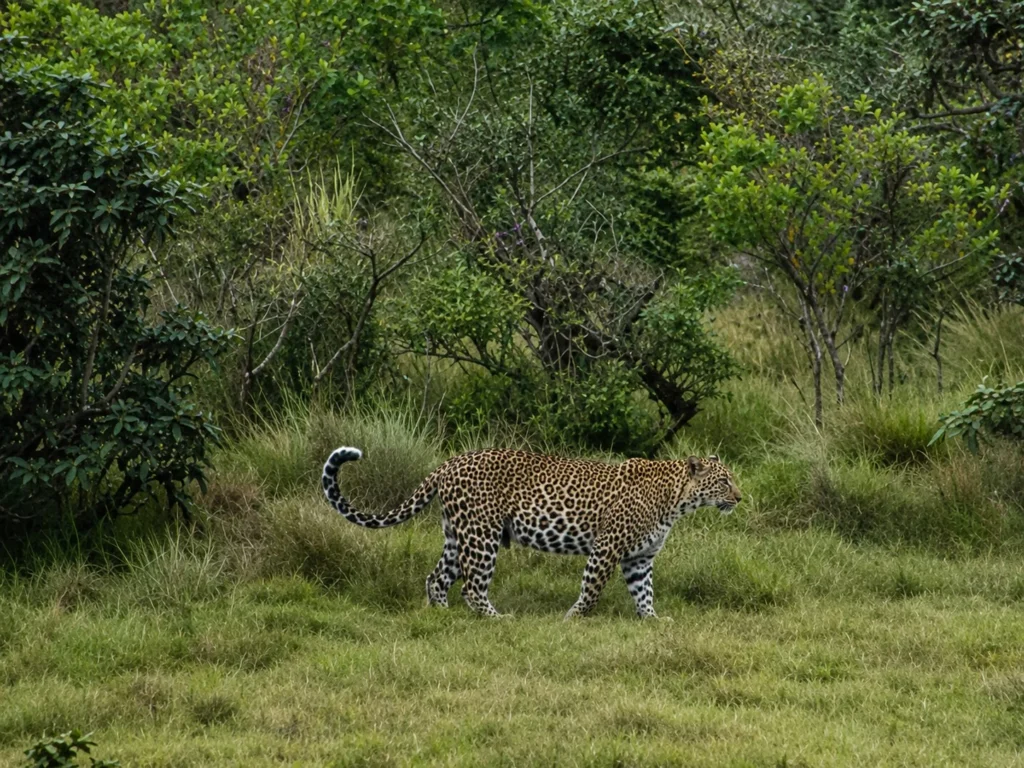
Horton Plains has its own legendary resident in HPM-8, better known by his nickname ‘Kolla’ — or, more dramatically, the ‘Prince of Horton Plains’. Kolla is a large, intimidating male whose size reflects the highland environment he has adapted to, and sightings of him among the misty grasslands and cloud forest edges have produced some of the most atmospheric leopard photographs ever taken in Sri Lanka. He is not easy to find, but that challenge is precisely what makes an encounter with Kolla feel like one of wildlife watching’s genuine achievements.
Sri Lanka Leopard Spotting: Quick Comparison Table
Best Time to See Leopards in Sri Lanka
The dry season is consistently the best time to maximise your leopard sighting chances across all Sri Lankan national parks, because shrinking water sources concentrate wildlife in predictable locations. For Yala and Kumana on the southeast coast, the prime window runs from February through June, when the landscape dries out and animals gather around the remaining waterholes in the afternoons. For Wilpattu in the northwest, the dry season runs from February through October, making it the longest window of peak wildlife activity of any major Sri Lankan park. Regardless of which park you choose, always aim for the early morning safari starting at or just after dawn — this is when leopards are most active, most visible, and most likely to be out in the open rather than sheltering in dense cover during the heat of the day.
Plan Your Leopard Safari with BlueSky Galle Taxis
Getting to any of Sri Lanka’s leopard hotspots has never been easier than it is with BlueSky Galle Taxis. As a full island-wide taxi and tour service, we don’t just cover the south coast — we operate across the entire island, meaning we can arrange comfortable, fixed-price private transfers to every major national park in Sri Lanka, including Yala, Kumana, Wilpattu, Horton Plains, Udawalawe, and beyond. Whether you’re based in Colombo, Galle, Ahangama, Mirissa, Kandy, or anywhere else on the island, we will get you to the park gates rested, on time, and ready for your safari rather than drained from a long bus journey or a stressful series of tuk-tuk connections.
Beyond the transfer itself, we also arrange expert-guided jeep safaris inside the parks — so instead of juggling two separate bookings with two different companies, you simply book everything through us and we handle the rest. One call, one confirmation, one seamless experience from your hotel door to your first leopard sighting. And if you’re still weighing up just how extraordinary Sri Lanka’s wildlife really is on the global stage, our blog post on Sri Lankan Safari vs African Safari: Which is Wilder? The Honest Comparison is essential reading before you go.
Ready to start planning? Hit the button below and let’s get your safari sorted.
FAQs
It is estimated that between 750 and 1,000 Sri Lankan leopards (Panthera pardus kotiya) live in the wild across the island, making it one of the healthiest leopard populations in Asia. The majority are concentrated within national parks, with Yala holding the highest density at 54 leopards per 100 km².
Yala National Park offers the highest leopard density in the country and therefore the highest probability of a sighting, particularly in Block 1. However, Kumana now holds the second highest density and offers a quieter, less crowded alternative that many experienced wildlife travellers prefer.
The highland leopards of Horton Plains are notably larger and more muscular than Sri Lanka's lowland leopards, having adapted to the cold montane environment over generations. Sri Lankan leopards in general tend to be confident and visible during daylight hours because they have no competing apex predators on the island.
The dry season delivers the best sightings across all parks. For Yala and Kumana, aim for February to June. For Wilpattu, the prime window extends from February to October. Early morning game drives, starting at or just after dawn, consistently produce the best leopard encounters regardless of the season.
Absolutely, and many wildlife enthusiasts choose to do exactly that. A popular itinerary combines Yala or Kumana in the southeast with Wilpattu in the northwest, covering the island's two most contrasting leopard habitats. If you're based on the south coast, BlueSky Galle Taxis can arrange private transfers to both parks with expert-guided safari packages to match.