B35 Elephant Road Sri Lanka: What Travelers Must Know
What Is the B35 Elephant Road and Why Is Everyone Talking About It?
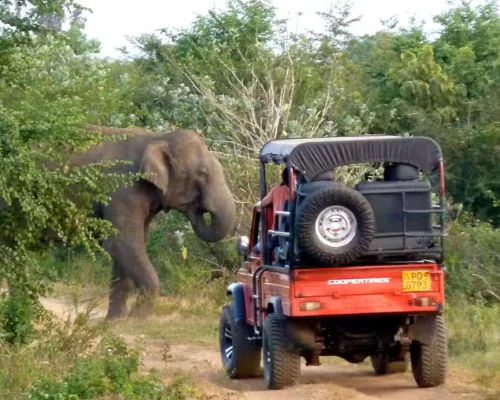
Imagine sitting in the passenger seat of a car, cruising along a perfectly ordinary public road through the dry jungle of southern Sri Lanka, when suddenly the traffic ahead slows to a stop. You crane your neck to see what’s causing the delay — a broken-down truck, perhaps, or a slow-moving tractor — and then you see it. A four-tonne wild elephant standing calmly in the middle of the road, trunk swaying, completely unbothered by the line of vehicles forming behind it. This is not a staged wildlife encounter. There is no park entry fee, no safari jeep, and no fence between you and one of the largest land animals on earth. This is just a Tuesday afternoon on Sri Lanka’s B35 road — and it is one of the most extraordinary experiences available to any traveller anywhere on the planet.
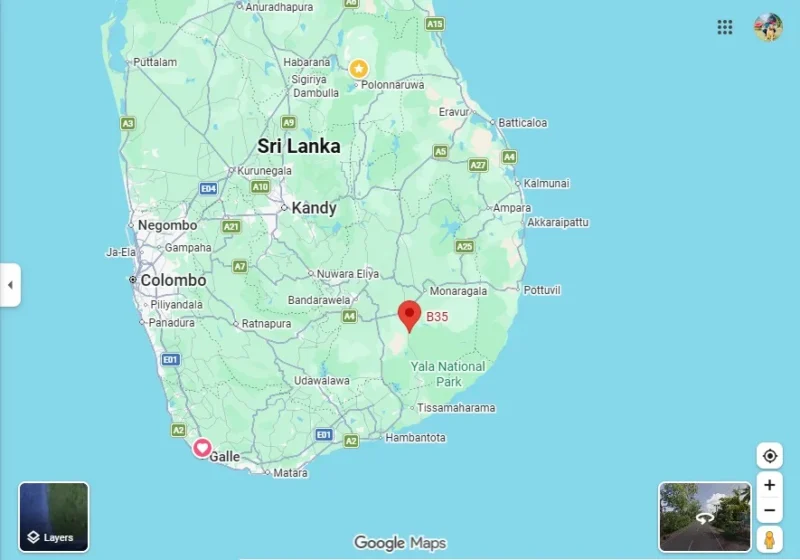
The B35 runs along the western edge of Yala National Park in southeastern Sri Lanka, connecting the towns of Buttala and Kataragama, and has been featured in BBC wildlife documentaries. In recent years it has exploded in global awareness, going viral on TikTok and YouTube and becoming one of the most talked-about road trip experiences in Sri Lanka. Travel videos showing wild elephants casually blocking traffic — sometimes poking their trunks directly through open car windows in search of food — have racked up millions of views across social platforms, sending curious travellers from every corner of the world to this unremarkable-looking stretch of Sri Lankan tarmac. But behind the extraordinary footage lies a road that demands respect, preparation, and ideally a professional local driver who knows its rhythms intimately.
Where Exactly Is the B35 Road Located?
The B35 Buttala-Kataragama Road is located in the southeastern region of Sri Lanka, forming an alternative route between Buttala and Sella Kataragama that runs partly parallel to the faster A2 route most travellers take. On a map it looks entirely unremarkable — a modest B-road cutting through rural Sri Lanka. In reality it cuts directly through one of the most ecologically important wildlife corridors on the island, passing along the boundary of Yala National Park and threading through the buffer zone between Yala and Lunugamvehera National Park. If you are travelling between popular tourist destinations such as Ella, Yala, Kataragama, or Buttala, your route will either take you along or very near this extraordinary stretch of road. There is a police checkpoint at the entrance to the Yala National Park section of the B35, where officers may check your driving licence and warn you about the dangers of wild elephants.
Why Are So Many Elephants on This Road?
The concentration of wild elephants along the B35 is not a coincidence — it is the direct result of this road’s geography. The highway cuts through a vital wildlife corridor that elephants use to move between Yala National Park and Lunugamvehera National Park, following ancient migratory routes that predate the road by thousands of years. Elephants haven’t changed their movement patterns just because humans built a road across their corridor — they simply continue using it, day and night, as they always have. According to reports, there are believed to be four bull elephants on the B35 that have become heavily associated with this road, with their behaviour increasingly shaped by interaction with passing vehicles. The result is a situation that is simultaneously magical and ecologically complex — a place where the ancient world of wild Sri Lankan elephants collides daily with the modern world of cars, cameras, and curious tourists.
Meet Raaja — Sri Lanka's Most Famous Wild Elephant
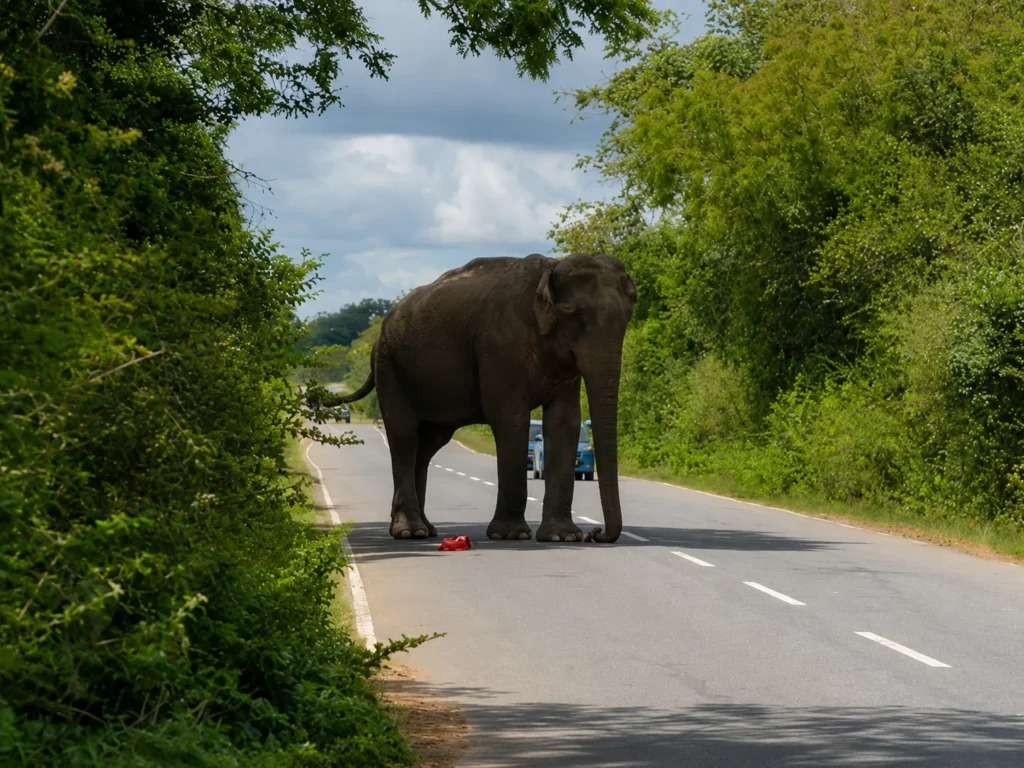
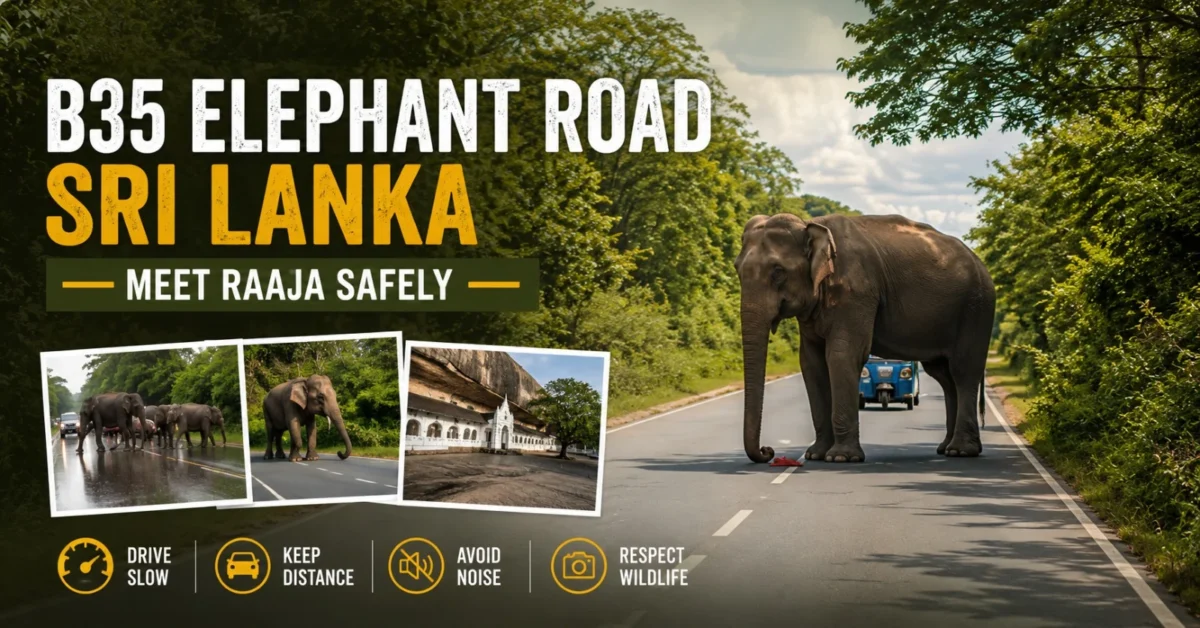
Of all the elephants that call the B35 home, one has achieved something genuinely remarkable — international celebrity status. Known to locals as “Raaja”, meaning king, this elephant is believed to be over 40 years old and has become an iconic figure along the Buttala-Kataragama road, stopping vehicles and requesting food from drivers in a manner so calm and persistent that locals humorously refer to his behaviour as “authoritarian tax collection.”
Raaja’s method is as calm as it is effective — he positions himself along the roadside and, upon spotting a vehicle, approaches with his massive trunk, gently requesting food from drivers. His patience is key to his charm: he avoids aggression, and his persistent yet peaceful gestures eventually compel drivers to offer fruits or other edibles, turning the interaction into a unique roadside ritual. Locals call him a “Hila Aliya” — a wild elephant who has become completely habituated to human presence and vehicles. Drivers travelling this route often purchase fruits like bananas in anticipation of encountering Raaja, and small roadside stalls between Lunugamvehera and Sella Kataragama thrive on this practice, catering to travellers eager to meet him.
Seeing Raaja up close is, by universal agreement among those who have experienced it, one of the most unforgettable wildlife encounters in all of Asia. There is something deeply moving about locking eyes with a 40-year-old wild elephant through a car window — an animal that has roamed these jungles since before most tourists visiting Sri Lanka were born, and who regards your vehicle with the calm, unhurried confidence of an animal that has absolutely nothing to fear. However, and this cannot be stressed enough, Raaja is still a powerful wild animal — and despite his relaxed demeanour, he deserves the same absolute respect as any wild elephant anywhere in the world.
The Real Risks of Driving the B35 — What Nobody Tells You
The B35’s viral fame has a shadow side that the exciting TikTok videos tend to leave out entirely. A drive on the B35 is not necessarily dangerous, but it does require extra attention — the road runs partly through protected nature reserves where extra rules apply, and wild elephants can be unpredictable. The difference between a magical experience and a terrifying one on this road often comes down to the vehicle you’re in, the driver behind the wheel, and the decisions made in the critical seconds when a large tusker appears around the next bend.
Why Tuk-Tuks and Scooters Are a Genuinely Bad Idea
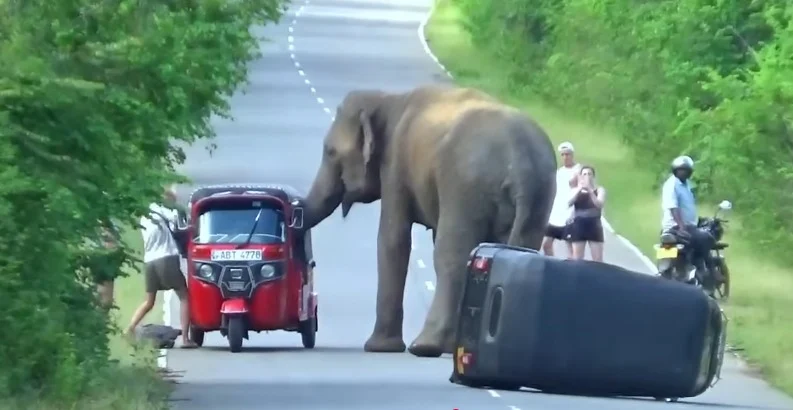
One travel blogger described the moment a massive elephant trunk reached into their tuk-tuk’s fragile metal frame as “a split second of terror and awe.” That description captures precisely why attempting the B35 on a rented scooter or tuk-tuk is so strongly discouraged by experienced Sri Lanka travellers and wildlife authorities alike. A tuk-tuk offers essentially zero protection against a four-tonne elephant that decides to investigate your vehicle — and the top speed of a standard tuk-tuk is roughly equal to a running elephant’s maximum pace, leaving you with no safety margin whatsoever if a situation escalates. One traveller reflected after their B35 tuk-tuk encounter that had their vehicle been flipped, the story would have ended very differently. The road also demands confident reversing and manoeuvring in tight spaces when elephants block the path — skills that are genuinely stressful to execute under pressure for any driver unfamiliar with the terrain.
The Ethical Side of the B35 Nobody Wants to Talk About
The B35’s elephant encounters come with an ethical dimension that every responsible traveller should understand before visiting. Elephants like Raaja are modifying their natural behaviour as a result of human interaction — Asian elephants are forest-dwelling animals that would normally only come out into the open at night, which means hanging out on an open road during the middle of the day is entirely unnatural behaviour. Incidents between elephants and vehicles are more likely along roads where animals are regularly fed, as they tend to frequent these areas more often, and elephants tend to roam less when they can access food from roadside vehicles, leading to health complications from reduced exercise and exposure to cross-species diseases. Enjoying the B35 responsibly means never feeding the elephants, however tempting Raaja’s outstretched trunk makes it — doing so contributes directly to the behavioural changes that make this road increasingly problematic for both wildlife and human safety.
Essential Safety Rules Every Visitor Must Follow on the B35
The B35 is a road that rewards respect and punishes recklessness in equal measure. Before you travel it in any vehicle, these rules are non-negotiable.
Keep your distance at all times. If an elephant is blocking the road, stop at least 100 metres away and wait for a larger vehicle to pass if possible. Never approach closer to get a better photograph — your zoom lens exists precisely for this situation.
Stay inside your vehicle. According to the Sri Lankan Flora and Fauna Protection Ordinance, it is officially illegal to stop or feed wild animals within the boundaries of national parks, including the section of the B35 that passes through Yala. This means staying in your vehicle and keeping moving is not just good safety advice — it is the law.
Never feed the elephants. Despite what you see other drivers doing, feeding wild elephants on the B35 is both illegal within park boundaries and actively harmful to the animals’ long-term wellbeing and natural behaviour.
Do not honk your horn or rev your engine aggressively. If an elephant is blocking your path, turn your headlights off, keep the engine idling quietly, and wait patiently for the animal to move at its own pace. Sudden loud noises are one of the fastest ways to turn a calm elephant encounter into a dangerous one.
Travel at dawn or dusk. These are the hours when elephant activity along the B35 is highest and wildlife sightings are most rewarding, while the lower temperatures also mean the animals tend to be calmer and less stressed.
The Safest and Most Enjoyable Way to Experience the Elephant Road
Having weighed up every option — rented scooter, tuk-tuk, self-drive car, public bus — the conclusion that experienced Sri Lanka travellers consistently reach is the same: the B35 is best experienced from the passenger seat of a private taxi with a professional local driver who knows the road. This is not just about comfort, though an air-conditioned vehicle is significantly more pleasant than a sweating tuk-tuk cabin. It’s about safety, local knowledge, and the freedom to focus entirely on the extraordinary wildlife around you rather than on steering, reversing, and nervously monitoring the road ahead simultaneously.
At BlueSky Galle Taxis, our professional drivers have travelled the B35 Buttala-Kataragama road many times and know its rhythms intimately — including the behaviour of individual elephants like Raaja. They know exactly when to slow down, how much distance to maintain, how to handle a roadblock caused by a large tusker, and how to position the vehicle so you get the clearest possible views and photographs from the safety of a solid, enclosed cabin. You experience all of the magic and none of the anxiety — which is, by any measure, the best possible outcome on one of the world’s most extraordinary roads.
What Else Will You See on the B35?
The elephants get all the headlines, but the B35 delivers a full wildlife experience that goes well beyond its famous pachyderms. The road passes through dense dry jungle teeming with Sri Lankan wildlife at every level. Families of grey langur monkeys are almost guaranteed sightings, often attempting to investigate parked vehicles with the same confidence Raaja brings to his toll-collecting duties. Peacocks displaying their extraordinary tail feathers along the road edge are a regular sight, particularly in the early morning. Monitor lizards bask on the warm tarmac in the afternoon heat, retreating lazily into the undergrowth as vehicles approach. Spotted deer, wild buffalo, and an extraordinary diversity of bird species including the Sri Lanka junglefowl — the island’s national bird — all make regular appearances along this remarkable stretch of road. The B35 is, in short, a wildlife corridor in the most literal sense of the phrase, and every kilometre of it has the potential to surprise you.
How to Include the B35 in Your Sri Lanka Itinerary
The B35 fits naturally into several of Sri Lanka’s most popular travel routes. Travellers moving between Ella and Yala will find the B35 falls almost directly on their path, making it a logical and thrilling addition to what is already one of Sri Lanka’s great scenic drives. Those travelling between Colombo or the south coast and Kataragama — one of Sri Lanka’s most sacred pilgrimage sites — pass through or near the B35 corridor. The road also connects naturally with visits to Bundala National Park to the south and forms a logical link between Yala and the ancient fortress city of Kataragama for travellers exploring the southeast. BlueSky Galle Taxis operates island-wide, meaning we can arrange private transfers that incorporate the B35 as part of a broader Sri Lanka itinerary — from any starting point, to any destination, with the elephant road built into the route at exactly the right moment
Who Travels the B35 Most
The B35 Elephant Road is most heavily used by travellers moving between Sri Lanka’s south coast and east coast, and understanding exactly where it fits in your itinerary makes the difference between stumbling across it by accident and planning a genuinely unforgettable experience around it. The most common use of this route is by travellers heading from Tissamaharama (Tissa) or Yala to Arugam Bay, or making the reverse journey back south from Arugam Bay — the B35 forms the natural backbone of this popular cross-country transfer, meaning thousands of surf travellers and wildlife enthusiasts pass through elephant territory every single season without even realising they’re on one of Sri Lanka’s most famous roads.
Heading to Ella? Here's a Scenic Detour Worth Considering
If you’re travelling from Tissa or Yala up to Ella, the most direct route typically goes via Thanamalwila. However, if experiencing the Elephant Road is on your wish list — and spotting Raaja is a genuine goal — you can ask your driver to take the B35 through Buttala to Wellawaya, from where the road climbs beautifully up into the hill country toward Ella. This detour adds a handful of extra kilometres to your journey, but for the chance of a wild elephant encounter in one of Sri Lanka’s most atmospheric wildlife corridors, most travellers who take it will tell you without hesitation that every extra kilometre was completely worth it.
Important Booking Note: Since this scenic detour adds extra mileage to the trip, there will be a slight adjustment to the final price. Please let us know in advance if you prefer this route so we can calculate the exact distance and provide you with an accurate upfront quote before you lock in your booking!
Yala Block 5 — The Hidden Safari Bonus on the B35
Here’s a tip that even many experienced Sri Lanka travellers don’t know: if you’re planning a safari in Yala National Park’s lesser-known Block 5 — a quieter, less-crowded alternative to the famous Block 1 — the official Galge Entrance to Yala Block 5 is located directly on the B35 Buttala-Kataragama road itself. This makes the B35 the perfect route to combine a thrilling highway elephant spotting drive with an official guided evening safari inside the park, all in a single seamless afternoon. Two extraordinary wildlife experiences, one road, zero wasted time — it doesn’t get more efficient than that for Sri Lanka wildlife enthusiasts.
Book Your Island-Wide Sri Lanka Taxi Today
Navigating wildlife corridors like the B35 requires experienced, confident driving and a solid, reliable vehicle that gives you both safety and comfort when the unexpected happens — and on the B35, the unexpected is essentially guaranteed. Whether you need a direct Colombo to Yala taxi to kick off your safari adventure in the south, or a comfortable private transfer from Arugam Bay back down to the south coast with the elephant road built into your route, BlueSky Galle Taxis has you covered with professional, island-wide service you can trust completely.
Our drivers know these roads the way most people know their own neighbourhood — including the individual personalities and habits of famous residents like Raaja. They know when to slow down, where to position the vehicle for the best views, and exactly how to handle whatever the B35 decides to throw at you on any given day. Don’t risk the anxiety of navigating elephant territory alone in a rented scooter or tuk-tuk. Sit back, relax, and let an experienced professional handle the road while you focus entirely on one of the most extraordinary wildlife experiences Sri Lanka has to offer.
FAQs — B35 Elephant Road Sri Lanka
The B35 runs through southeastern Sri Lanka, connecting Buttala and Sella Kataragama along the western boundary of Yala National Park. It passes through the wildlife corridor between Yala and Lunugamvehera National Parks, which is why elephant sightings are so frequent along this route.
The B35 can be driven safely if you travel in an appropriate vehicle — a solid, enclosed car or private taxi is strongly recommended. A drive on the B35 is not necessarily dangerous, but it requires extra attention and preparation. Tuk-tuks and scooters are actively discouraged due to the minimal protection they offer in close elephant encounters.
It is actually illegal to stop on roads that pass through national parks in Sri Lanka, including the B35. You must remain in your moving vehicle and cannot stop specifically to photograph wildlife within park boundaries.
No — feeding wild elephants on the B35 is both illegal within park boundaries and genuinely harmful to the animals' natural behaviour and health. Enjoy the encounter from a respectful distance without offering food, however irresistible Raaja's outstretched trunk makes it look.
We provide safe, comfortable, fixed-price private transfers that can include the B35 Elephant Road as part of your Sri Lanka itinerary. Our experienced local drivers know this road intimately, including the behaviour of its famous elephants, ensuring you experience every magical moment from the complete safety and comfort of a professional, enclosed vehicle.